Monday, 10-16-11
Here are some figures from the Salvadoran newspaper, La Prensa, about El Salvador and the rain:
• 32 people have been killed in El Salvador as a result of the rain, the majority died in landslides
• 576 landslides have taken place
• 150,000 people are at risk of being affected by the constant rains that have hit the country this week.
• 20,000 people have been evacuated from their homes
• 261 emergency shelters have been set up across the country to house people
• 38 rivers have overflowed
• 2,165 areas in the streets have been damaged
• 3 of the country’s main rains have been closed due to the rain (landslides and debris)
• 0 schools are having classes. Classes are still suspended until further notice
• 102 schools are being used as shelters to house people who’ve been displaced by the rains
• 257 schools in El Salvador have been damaged by the constant rain. Preliminary estimates put the damage at 3 million dollars.
• 42 inches of rain have fallen in the city of Huizúcar, which is close to San Salvador, since last Monday; that’s the most in the country. Here in Berlín we’ve had about 30 inches of rain since last Monday.
http://www.laprensagrafica.com/
Showing posts with label Water. Show all posts
Showing posts with label Water. Show all posts
Monday, October 17, 2011

Saturday, October 15, 2011
Rainy day funeral
Thursday, 10-13-11
No day is ever a good day for a funeral. But having a funeral during such terrible weather seems to add insult to injury. José Manual, who was originally from the canton of Virginia, died yesterday in San Salvador. In San Salvador he leaves behind his young, very pregnant wife and his wife’s family. His sister, Elida, and their family still live in Virginia. Elida is a Delegate of the Word in Virginia and frequent visitor to the Pastoral House.
The family stopped by yesterday when we had no electricity to pick up sugar, coffee, and money for pan dulce that they were going to use for the vigil that night. The Pastoral Team also loaned them chairs for the vigil. As is custom here in El Salvador, the family stays with the body of their loved one through the night after their death. They drink coffee and eat pan dulce while mourning, singing, crying, and praying together.
We heard the slow ringing of the bells at the church around 10am this morning and knew the funeral mass was about to start. Since it was still raining, Kathy and I put on knee length skirts so as not to get our pants wet and dirty. We all grabbed umbrellas and headed out to the church. Although it wasn’t raining very hard the wind had picked up which pretty much rendered the umbrellas useless.
The mass had just started when we arrived at church. There were probably about 50 people gathered toward the front of the church. Several opened umbrellas had been left by the doors. Everyone was wet, and some people had arrived without umbrellas or coats. As if the rain and wind wasn’t bad enough, a mosquito fumigating truck slowly roared past just as Father Santos was starting his homily which created a lot of noise.
About an hour later the mass ended. The casket was lifted up onto peoples’ shoulders and carried down the aisle to a truck waiting outside. Normally the back of the truck is opened and adorned with flowers, but because of the rain they’d put a cover over the bed of the truck. We all filed out of the church and got behind the truck for the procession to the cemetery. It was a long, cold walk.
When we arrived at the cemetery we went just inside the gates to the place where caskets can be set on a tiled, cement table. There is a roof overhead but because of the wind, the rain came in anyway. As everyone gathered around the casket Elida led the group in saying the “Our Father” and the “Hail Mary.” The small door to the window at the top of the casket was opened so people could take one last look at José Manual before he was buried. Elida’s mother was devastated as she laid her head on the glass window and cried for her son.
After a short while the door to the window was closed and the casket again hoisted up onto peoples’ shoulders as we began the walk to the gravesite. Walking through the cemetery in Berlín is always a little like an obstacle course. The graves don’t seem to be arranged in any particular order and much of the cemetery is covered in weeds. There’s no way to avoid stepping on graves.
But the rain adds a whole new element. Forget about staying clean, forget about staying dry. I just wanted to get to the gravesite without slipping and falling. Some of the grave areas are covered in tile which makes them very slippery. Other parts of the cemetery are muddy and there’s the worry about stepping into a little sinkhole. Unfortunately, I stepped on a spot and my foot immediately sank down about 8 inches. But I didn’t fall, and on the positive side I was able to point out to people where they should not step.
Upon arriving at the gravesite we could see that someone had set up a huge tarp over the grave ahead of time. The tarp isn’t to keep people from getting wet, it’s to keep the area from becoming too saturated with water. The families and friends dig the holes for their loved ones’ caskets themselves, and if the soil is too wet it becomes very hard to dig the hole. They needed to shovel out a little more dirt when they arrived at the gravesite. As someone began shoveling everyone else began singing. But the singing came to a sudden stop when the man shoveling fell into the hole. He was quickly helped out and the singing resumed.
Soon it was time to lower the casket into the hole. As usual, two ropes were put beneath the casket so it could be lowered down. Then disaster struck again: the casket fell into the hole. I couldn’t see exactly what happened, but I know it went down sideways. Obviously, they weren’t just going to leave it in their sideways, so they hoisted it back out of the ground. The casket was set next to the gravesite as they resumed digging. I felt horrible for the family. It’s bad enough losing a loved one, but everything else seemed to make it worse.
It makes me think about all the people that have lost loved ones in the past several days due to the rain, accidents, homicides, or natural causes. I imagine they might be suffering similarly to the family today. They might be wet from a leaky roof or in the dark without electricity. Some of them may not even be able to be in their homes because of all the rain. I wonder if they’re able to have the traditional vigil and sit with their loved one through the night. Whatever the circumstances, I’m sure the rain doesn’t help.
Thursday, October 13, 2011
Heavy rains continue
Wednesday, 10-12-11
I woke up this morning to the sound of the radio and my alarm clock going off at 6:30am. I looked at my clock and saw that it still read 3:00. The electricity hadn’t come back on yet. Bummer. I could hear the rain hitting the roof and knew there would be no school today. I went to the dining room area to see what everyone was doing. Nothing much. Everyone was just sitting around at the table. Cecilia was making breakfast. Schools might be closed but thank goodness the bread lady came as usual so we could have bread with our beans and eggs. Blanca made plantains with cinnamon to accompany the other foods. We may be stuck in the house but we were dining well.
After breakfast I pondered what I should do with my morning since it was still raining and we had no power. I could read a book, but the only ones I brought with me are about massacres and genocides around the world. Cheerful stuff, I know. I thought about what I would do if I were at my house in the States if it was raining and I was without power. Play a board game. Go to a coffee shop. Work on scrapbooking. Visit friends. Work out at the YMCA. But there really aren’t a whole lot of options here. Sure, there were things I could do, things I needed to get done. I could have cleaned my room, organized the pictures I had printed out for people, worked on school things, etc. But I was feeling really lazy and lethargic and none of those things sounded particularly enticing.
Kathy brought some word and number games from her office as well as a book to read. Blanca was crocheting a scarf from some yarn she’d had for several years. Cecilia worked on the puzzle. Idalia listened to the radio. I eventually settled on reading a Newsweek magazine I’d gotten from the States back in May that I hadn’t read yet. The time seemed to drag by. Every time I glanced up at the clock only 15 minutes had gone by. After a while I felt myself getting antsy.
I got up and went to go see what everyone was doing. I grabbed my camera so I could document what I called these “important moments.” When I’d finished taking pictures I got my birds out of their cage. They’d been stuck inside the house for a while since it’s been raining. We made a trip to up to Alejandro’s room to see what he was doing. He’d stayed home this morning as well because of the rain and was cleaning his tools. The birds tried to help but they just played on his toolbox. Soon they were getting cold so I took them back to their cage in my room to get warm.
Around 10am, after listening to everyone comment on the pajama pants I was still wearing, I decided to put on regular pants. The ladies said if we had to leave the house quickly for some reason then everyone on the street would comment on my red pants that had hearts all over them. I believe this was prompted by a call we received telling us that someone from one of the cantons had died and the family was going to be stopping by later in the day. The Pastoral Team would be donating some sugar and coffee and giving them money to buy bread for the vigil held that night. I couldn’t help but think how awful it would be to lose someone on such a crummy day like this one.
Everything feels wet. Everything smells wet. There’s a musty odor in the air. Thank goodness almost all of my clothes are clean so I don’t have to worry about doing laundry. It would never dry in this kind of weather. As I was looking in my closet and contemplating putting on a new shirt I realized that some of my jewelry had started to grow mold. Yuck!! Things get moldy here so quickly. And it seems like really strange things that shouldn’t be growing mold start growing moldy. I just cleaned my suitcase a couple days ago because I realized it was growing mold. I went to Kathy’s office looking for sympathy. But she’s been having mold problems as well. It went after her shoes and her walls. That’s life in the raining season.
Since I’d finished my magazine I dragged myself back to the dining room table to read the newspaper. But it didn’t have anything happy to offer me. There were reports of damage from the rain and people that have been evacuated from their homes. In the department of Usulután, the cities of Berlín (where I live), Alegría, and Santiago de María are at a high risk of flooding and landslides due to rain. On the news we heard that the Ministry of Education has cancelled school tomorrow for the entire department of Usulután. And lots of folks are starting to worry about their corn and bean crops and whether or not they’ll be washed away.
A little before 3pm Elida and her family stopped by. They had been in San Salvador to retrieve the body of her brother. After getting hugs from everyone she sat down to rest and have some hot tea. The team got her the sugar, coffee, and money for the pan dulce. Then we carried plastic chairs that her family would be using that evening for the vigil to the truck waiting outside the house. The rain had not relented and I was again reminded of how difficult it must to lose a loved one and have the vigil on such a cold, unpleasant night.
Just as Elida and her family were leaving the power came back on. We’d gone for 24 hours without electricity, though it felt like much longer. As soon as the family was on their way the TV was turned on, computers turned on, and phones plugged in. You’d had thought we’d been without power for days the way we all were acting. I hadn’t received any earth shattering emails and my family all knew I was safe so I probably could have gone longer without using my computer. It’s amazing how attached we are to technology, even in a developing country like El Salvador.
Not long after the power came back on Ismael and Carmen from La Llanes stopped by. Ismael had been in the hospital in Santiago de María with some sort of bad stomach problem for a couple days. We were all glad to see that he was okay and had been released. Of course, now that they were back in Berlín they had a two hour walk in the pouring rain to get home. So they had some coffee and pan dulce here before they began their trek to La Llanes. Blanca gave Ismael a coat to wear since he only had on what he’d worn to the hospital. The ladies also gave them both huge garbage bags that they assembled into ponchos. I couldn’t imagine walking for two hours in the rain after getting out of the hospital.
Around 5pm I decided to see what was going on outside the house. I wanted to see if the ladies at the Evangelical Church were making pasteles or if someone was selling french fries. But I had no such luck. As opposed to most days at that time, today the town seemed completely abandoned. Only a couple of the small stores were open. I went inside and got some yogurt, pachanga mix, and chocolate cupcakes. Those were the things I decided I needed to survive the night and the next couples days. I hear there’s another storm coming. I wonder what tomorrow will bring.


I woke up this morning to the sound of the radio and my alarm clock going off at 6:30am. I looked at my clock and saw that it still read 3:00. The electricity hadn’t come back on yet. Bummer. I could hear the rain hitting the roof and knew there would be no school today. I went to the dining room area to see what everyone was doing. Nothing much. Everyone was just sitting around at the table. Cecilia was making breakfast. Schools might be closed but thank goodness the bread lady came as usual so we could have bread with our beans and eggs. Blanca made plantains with cinnamon to accompany the other foods. We may be stuck in the house but we were dining well.
After breakfast I pondered what I should do with my morning since it was still raining and we had no power. I could read a book, but the only ones I brought with me are about massacres and genocides around the world. Cheerful stuff, I know. I thought about what I would do if I were at my house in the States if it was raining and I was without power. Play a board game. Go to a coffee shop. Work on scrapbooking. Visit friends. Work out at the YMCA. But there really aren’t a whole lot of options here. Sure, there were things I could do, things I needed to get done. I could have cleaned my room, organized the pictures I had printed out for people, worked on school things, etc. But I was feeling really lazy and lethargic and none of those things sounded particularly enticing.
Kathy brought some word and number games from her office as well as a book to read. Blanca was crocheting a scarf from some yarn she’d had for several years. Cecilia worked on the puzzle. Idalia listened to the radio. I eventually settled on reading a Newsweek magazine I’d gotten from the States back in May that I hadn’t read yet. The time seemed to drag by. Every time I glanced up at the clock only 15 minutes had gone by. After a while I felt myself getting antsy.
I got up and went to go see what everyone was doing. I grabbed my camera so I could document what I called these “important moments.” When I’d finished taking pictures I got my birds out of their cage. They’d been stuck inside the house for a while since it’s been raining. We made a trip to up to Alejandro’s room to see what he was doing. He’d stayed home this morning as well because of the rain and was cleaning his tools. The birds tried to help but they just played on his toolbox. Soon they were getting cold so I took them back to their cage in my room to get warm.
Around 10am, after listening to everyone comment on the pajama pants I was still wearing, I decided to put on regular pants. The ladies said if we had to leave the house quickly for some reason then everyone on the street would comment on my red pants that had hearts all over them. I believe this was prompted by a call we received telling us that someone from one of the cantons had died and the family was going to be stopping by later in the day. The Pastoral Team would be donating some sugar and coffee and giving them money to buy bread for the vigil held that night. I couldn’t help but think how awful it would be to lose someone on such a crummy day like this one.
Everything feels wet. Everything smells wet. There’s a musty odor in the air. Thank goodness almost all of my clothes are clean so I don’t have to worry about doing laundry. It would never dry in this kind of weather. As I was looking in my closet and contemplating putting on a new shirt I realized that some of my jewelry had started to grow mold. Yuck!! Things get moldy here so quickly. And it seems like really strange things that shouldn’t be growing mold start growing moldy. I just cleaned my suitcase a couple days ago because I realized it was growing mold. I went to Kathy’s office looking for sympathy. But she’s been having mold problems as well. It went after her shoes and her walls. That’s life in the raining season.
Since I’d finished my magazine I dragged myself back to the dining room table to read the newspaper. But it didn’t have anything happy to offer me. There were reports of damage from the rain and people that have been evacuated from their homes. In the department of Usulután, the cities of Berlín (where I live), Alegría, and Santiago de María are at a high risk of flooding and landslides due to rain. On the news we heard that the Ministry of Education has cancelled school tomorrow for the entire department of Usulután. And lots of folks are starting to worry about their corn and bean crops and whether or not they’ll be washed away.
A little before 3pm Elida and her family stopped by. They had been in San Salvador to retrieve the body of her brother. After getting hugs from everyone she sat down to rest and have some hot tea. The team got her the sugar, coffee, and money for the pan dulce. Then we carried plastic chairs that her family would be using that evening for the vigil to the truck waiting outside the house. The rain had not relented and I was again reminded of how difficult it must to lose a loved one and have the vigil on such a cold, unpleasant night.
Just as Elida and her family were leaving the power came back on. We’d gone for 24 hours without electricity, though it felt like much longer. As soon as the family was on their way the TV was turned on, computers turned on, and phones plugged in. You’d had thought we’d been without power for days the way we all were acting. I hadn’t received any earth shattering emails and my family all knew I was safe so I probably could have gone longer without using my computer. It’s amazing how attached we are to technology, even in a developing country like El Salvador.
Not long after the power came back on Ismael and Carmen from La Llanes stopped by. Ismael had been in the hospital in Santiago de María with some sort of bad stomach problem for a couple days. We were all glad to see that he was okay and had been released. Of course, now that they were back in Berlín they had a two hour walk in the pouring rain to get home. So they had some coffee and pan dulce here before they began their trek to La Llanes. Blanca gave Ismael a coat to wear since he only had on what he’d worn to the hospital. The ladies also gave them both huge garbage bags that they assembled into ponchos. I couldn’t imagine walking for two hours in the rain after getting out of the hospital.
Around 5pm I decided to see what was going on outside the house. I wanted to see if the ladies at the Evangelical Church were making pasteles or if someone was selling french fries. But I had no such luck. As opposed to most days at that time, today the town seemed completely abandoned. Only a couple of the small stores were open. I went inside and got some yogurt, pachanga mix, and chocolate cupcakes. Those were the things I decided I needed to survive the night and the next couples days. I hear there’s another storm coming. I wonder what tomorrow will bring.

Reading at breakfast

Listening to the radio

Working on the puzzle

Cleaning tools

Investigating

Helping out

Crocheting a scarf

Lots of umbrellas

Barbara got wet

Trying to dry out
Wednesday, October 12, 2011
Orange alert in El Salvador
Tuesday, 10-11-11
It rained yesterday and it was raining this morning when I work up. It doesn’t typically rain in the mornings here, usually in the afternoons and evenings. I rolled out of bed and got ready to go to school as usual. But when I arrived at school I was surprised to see that there weren’t very many students. My first hour class had 12 students and my second hour class only 10. My third hour had 18 students, the fourth hour teacher didn’t show up so there was no class, and my final hour class had 2 students who both left before it was time for me to teach. Several teachers didn’t show up at all. When I asked why, the teachers and students told me it was because it was raining. I was a little confused at first. It rains all the time here during the rainy season. I didn’t understand why the rain this morning would hinder the kids from coming to school.
Then I went to my second hour class. I sat down and the teacher, Milagro, and social worker, Marta, started telling me all about rain and Berlín. It turns out that Berlín is one of the cities in El Salvador most at risk for landslides (I remember reading that before somewhere). The area has been hit with landslides and flooding several times in the past. They talked about 1998 when Hurricane Mitch hit Central America. A majority of the damage to Berlín came on October 31, which is Berlín’s birthday. They told me people were also beginning to prepare to celebrate the Day of the Dead that day.
On that day a ton of rain fell and water suddenly came rushing down from the hill southwest of the city. The river of water brought with it lots of debris, including large boulders, one of which still stands in Berlín on the road to Alegría. Milagro and Marta told me that the high school was completely flooded. All of the documents at the high school, including documents from when they were both in school, were destroyed. “Gracias a Dios” (Thank God) Milagro said, that it was a Saturday and there were no classes, no students.
Later at home I read that there was $400 million worth of damage to El Salvador and 240 people were killed due to the hurricane. “While drifting through El Salvador, the hurricane dropped immense amounts of precipitation, resulting in flash flooding and mudslides through the country. Multiple rivers, including the Río Grande de San Miguel and the Lempa River overflowed, contributing to overall damage. The flooding damaged more than 10,000 houses, leaving around 84,000 homeless and forcing 500,000 to evacuate. Crop damage was severe, with serious flooding occurring on 386 square miles of pasture or crop land. The flooding destroyed 37% of the bean production, 19% of the corn production, and 20% losses in sugar canes. There were heavy losses in livestock as well, including the deaths of 10,000 cattle. Total agricultural and livestock damaged amounted to $154 million.” (Wikipedia).
We also talked about a landslide in May of 2007 that affected Berlín. It was the middle of the night when thunderstorms and heavy rains caused flooding and landslides which resulted in the deaths of 5 people and the destruction of the community, Brisas del Sol, which is a part of Berlín. People in the community took shelter at the Catholic Church. The community has since been rebuilt in a different area.
I left school feeling sad and wondering what might await people across the country. Starting this morning we are supposedly going to have rain for 48 hours. Maybe more. Parts of the country are on yellow alert and others on orange alert because of the rain. Cecilia told me that if the rain continued there would be no classes tomorrow. Then the rest my day continued as usual. We had a meeting this afternoon which lasted three hours. In the middle of the meeting the power went off which is nothing new. However, the lights hadn’t come back on after a couple hours. With all the rain and no power I was starting to get antsy. I decided to go get french fries at one of the local street vendors for everyone. It was pouring, but I was hungry and french fries sounded really good. It was a tasty pre-dinner snack.
Soon it got dark out, around 5:30pm. With lots of rain, no power, and complete darkness there’s not much to do. Thankfully the stove here, like many in El Salvador, runs off gas. So we were able to cook ourselves dinner later and heat up water for tea and coffee. I decided it was the perfect opportunity to open the bottle of wine that’s been sitting in the kitchen for several months. We sat around the table talking by candlelight until 8pm. Then it was an early bedtime for all.


It rained yesterday and it was raining this morning when I work up. It doesn’t typically rain in the mornings here, usually in the afternoons and evenings. I rolled out of bed and got ready to go to school as usual. But when I arrived at school I was surprised to see that there weren’t very many students. My first hour class had 12 students and my second hour class only 10. My third hour had 18 students, the fourth hour teacher didn’t show up so there was no class, and my final hour class had 2 students who both left before it was time for me to teach. Several teachers didn’t show up at all. When I asked why, the teachers and students told me it was because it was raining. I was a little confused at first. It rains all the time here during the rainy season. I didn’t understand why the rain this morning would hinder the kids from coming to school.
Then I went to my second hour class. I sat down and the teacher, Milagro, and social worker, Marta, started telling me all about rain and Berlín. It turns out that Berlín is one of the cities in El Salvador most at risk for landslides (I remember reading that before somewhere). The area has been hit with landslides and flooding several times in the past. They talked about 1998 when Hurricane Mitch hit Central America. A majority of the damage to Berlín came on October 31, which is Berlín’s birthday. They told me people were also beginning to prepare to celebrate the Day of the Dead that day.
On that day a ton of rain fell and water suddenly came rushing down from the hill southwest of the city. The river of water brought with it lots of debris, including large boulders, one of which still stands in Berlín on the road to Alegría. Milagro and Marta told me that the high school was completely flooded. All of the documents at the high school, including documents from when they were both in school, were destroyed. “Gracias a Dios” (Thank God) Milagro said, that it was a Saturday and there were no classes, no students.
Later at home I read that there was $400 million worth of damage to El Salvador and 240 people were killed due to the hurricane. “While drifting through El Salvador, the hurricane dropped immense amounts of precipitation, resulting in flash flooding and mudslides through the country. Multiple rivers, including the Río Grande de San Miguel and the Lempa River overflowed, contributing to overall damage. The flooding damaged more than 10,000 houses, leaving around 84,000 homeless and forcing 500,000 to evacuate. Crop damage was severe, with serious flooding occurring on 386 square miles of pasture or crop land. The flooding destroyed 37% of the bean production, 19% of the corn production, and 20% losses in sugar canes. There were heavy losses in livestock as well, including the deaths of 10,000 cattle. Total agricultural and livestock damaged amounted to $154 million.” (Wikipedia).
We also talked about a landslide in May of 2007 that affected Berlín. It was the middle of the night when thunderstorms and heavy rains caused flooding and landslides which resulted in the deaths of 5 people and the destruction of the community, Brisas del Sol, which is a part of Berlín. People in the community took shelter at the Catholic Church. The community has since been rebuilt in a different area.
I left school feeling sad and wondering what might await people across the country. Starting this morning we are supposedly going to have rain for 48 hours. Maybe more. Parts of the country are on yellow alert and others on orange alert because of the rain. Cecilia told me that if the rain continued there would be no classes tomorrow. Then the rest my day continued as usual. We had a meeting this afternoon which lasted three hours. In the middle of the meeting the power went off which is nothing new. However, the lights hadn’t come back on after a couple hours. With all the rain and no power I was starting to get antsy. I decided to go get french fries at one of the local street vendors for everyone. It was pouring, but I was hungry and french fries sounded really good. It was a tasty pre-dinner snack.
Soon it got dark out, around 5:30pm. With lots of rain, no power, and complete darkness there’s not much to do. Thankfully the stove here, like many in El Salvador, runs off gas. So we were able to cook ourselves dinner later and heat up water for tea and coffee. I decided it was the perfect opportunity to open the bottle of wine that’s been sitting in the kitchen for several months. We sat around the table talking by candlelight until 8pm. Then it was an early bedtime for all.

Chatting

Listening to the radio
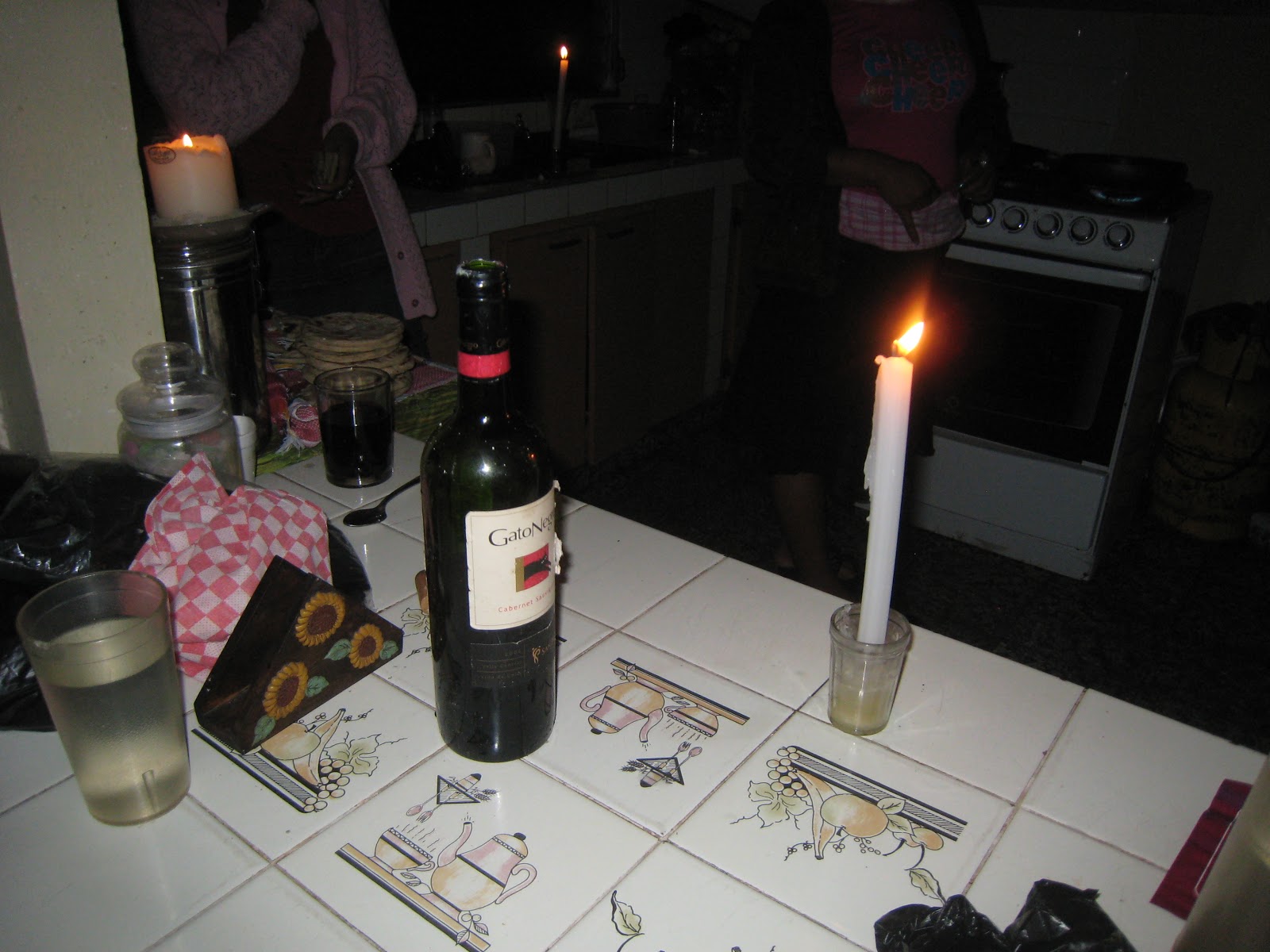
Wine and candles

Showing off a spiffy flashlight ring

Making dinner
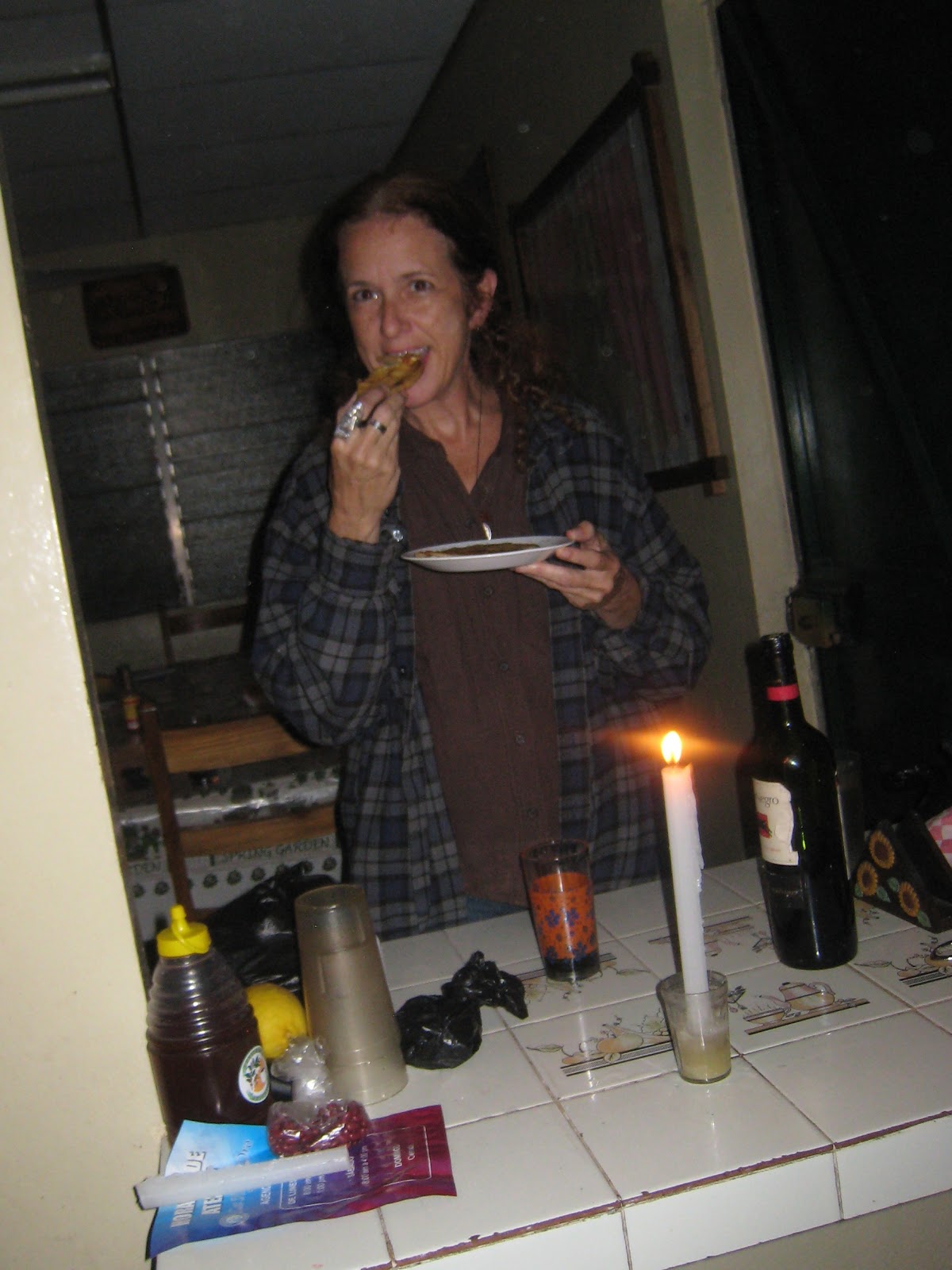
Mmmm, tortillas con queso

By candlelight

Around the table talking
Wednesday, September 21, 2011
Water tank project
Wednesday, 9-21-11
Today Blanca, Cecilia, and I went to the canton of San Francisco for a celebration. They were celebrating the large water collection tanks that were installed in the community for 44 families and the Pastoral Team had been invited. I had also been invited since my church in the US has a partnership with San Francisco.
Since Kathy isn’t here to drive us and I can’t drive a standard we were off by foot to the community. It’s about an hour walk. However, after about 5 minutes of walking Blanca had managed to flag down a moto taxi. It was someone she knew and she asked if he’d drive us to San Francisco. He said yes so the three of us hopped in. I’ve never seen a moto taxi drive to San Francisco before and I’m pretty sure it’s not allowed by the guy who owns the moto taxis. So I think we lucked out. We arrived after only 15 minutes. Several people were already at the church which is where the signing of the act and the celebration was to be held. We went inside the church to wait for a while until more people showed up.
A little background info: The project was implemented through FONAES (Fondo Ambiental de El Salvador) which is the non-governmental organization (NGO) that worked using funds from France to get the water collection tanks into the community. The Berlín City Hall was also involved in the process. The first phase of the project was done about a year ago with 44 tanks installed (two for each family= 22 families) and they just completed the second phase with 22 new families receiving tanks. Since people do not have running water in their homes the water tanks are used to collect water during the rainy season for cooking, cleaning, bathing, drinking, etc. Each tank holds 5000 liters of water.
Around 9am the celebration began. The first person to speak was someone from FONAES. He spent time talking to the community about how the tanks worked. Basically, each house has two tanks with a roof overhead. When it rains the water runs off the roof and into the water tanks. Water can be taken out of the tanks using a pump system. The two tanks are connected so as water is taken out of one tank it is replaced by water in the other tank. He discussed how to keep the roofs clean, how to keep the tanks cleans, and how to use the water filter that was given to each family with the tanks.
He spent quite a bit of time talking and interacting with the group. He asked people questions and had them respond. He asked people when the rainy season began in Berlín and when it ended. He asked people what they were going to do once the rainy season ended and water would not be falling into their tanks. People responded that here in Berlín it stops raining in October, and without their water tanks they’d have to walk to the nearest water source to get their water. Hopefully the water in their tanks can last them part of the way through the dry season.
He then asked the group how many cántaros (water jugs) per day they needed for their family. People responded that it depends on the size of the family, but anywhere from 4 to 10 cántaros are needed daily. He talked about heavy the cántaros are and how hard it is to carry water from far away. But now they won’t have to do this because they have their water tanks. However, he said they needed to take care of their tanks in order to reap the benefits.
The man also spent quite a bit of time talking about using the filters. In order to avoid drinking contaminated water and to prevent sickness people need to use their filters. This means parents, as well as their kids, using water from the filter. This is an opportunity for parents to teach their kids about responsibility. He reminded people that the filters needed to be cleaned and how to go about cleaning them.
Much of what he said I’d heard before as I’m sure others in the community had as well. But people need repetition, repetition, repetition. And when someone in the group wasn’t listening he told them to pay attention. At one point a baby had been crying for a while and he suggested that the mom take the baby out of the church so others could hear and pay attention. It seemed kind of like a teacher/student setting with the teacher repeating things and telling the students to pay attention.
After he’d finished someone from City Hall got up to talk. Several people went to go sit at the table of honor, including the man from FONAES, the president of the Directiva in Berlín, and the mayor of San Francisco. At this point the El Salvador National Anthem was played while we all stood. The mayor spoke briefly about how the water tanks would help people live better lives with more dignity. Then the president of the Directiva, Miguel, spoke briefly about what the project meant to the community, thanking God and everyone involved.
Then a different person from FONAES got up to read the official act that everyone signed who received the water tanks. As with all communities, not everyone knows how to read, so it was important that people understood the act. A committee of 7 people in the community is going to be in charge of helping to maintain the water tanks. That means they’ll visit families to ensure people are using the tanks and filters correctly and that if people have problems with the tanks they can talk to someone on the committee. The members were sworn in and all given a hat.
Next came time for the ceremonial putting dirt in a hole. I’m not sure how else to describe it. I guess it’s a universal symbol of starting (digging a hole) or finishing (putting dirt in a hole) a project. So we all went outside where concrete had been made for this event. I think the hole in the ground with the pole in it was supposed to represent the poles that were put into the ground for the roofs over the water tanks. First Father Jacobo read from the Bible and then sprinkled holy water on the pole. Then several people picked up the shovel to put cement into the hole: the mayor, the guy from FONAES, the president of the Directiva, and the members of the committee. Everyone cheered and someone from the press was there to take pictures.
When this had ended we waited around inside for a while because we were told there was going to be lunch. I was a little confused since it was only 10:30am. Of course, I’d forgotten that I was in El Salvador. Lunch arrived an hour later at 11:30am. They served everyone a huge bowl of soup full with veggies, a big piece of chicken on the side, two tortillas, and a glass of pineapple juice. I didn’t think I could eat it all at first but managed to finish it all off. When we’d finished eating we said goodbye to people and headed back to Berlín. I’m glad I got to be a part of the special celebration.


Today Blanca, Cecilia, and I went to the canton of San Francisco for a celebration. They were celebrating the large water collection tanks that were installed in the community for 44 families and the Pastoral Team had been invited. I had also been invited since my church in the US has a partnership with San Francisco.
Since Kathy isn’t here to drive us and I can’t drive a standard we were off by foot to the community. It’s about an hour walk. However, after about 5 minutes of walking Blanca had managed to flag down a moto taxi. It was someone she knew and she asked if he’d drive us to San Francisco. He said yes so the three of us hopped in. I’ve never seen a moto taxi drive to San Francisco before and I’m pretty sure it’s not allowed by the guy who owns the moto taxis. So I think we lucked out. We arrived after only 15 minutes. Several people were already at the church which is where the signing of the act and the celebration was to be held. We went inside the church to wait for a while until more people showed up.
A little background info: The project was implemented through FONAES (Fondo Ambiental de El Salvador) which is the non-governmental organization (NGO) that worked using funds from France to get the water collection tanks into the community. The Berlín City Hall was also involved in the process. The first phase of the project was done about a year ago with 44 tanks installed (two for each family= 22 families) and they just completed the second phase with 22 new families receiving tanks. Since people do not have running water in their homes the water tanks are used to collect water during the rainy season for cooking, cleaning, bathing, drinking, etc. Each tank holds 5000 liters of water.
Around 9am the celebration began. The first person to speak was someone from FONAES. He spent time talking to the community about how the tanks worked. Basically, each house has two tanks with a roof overhead. When it rains the water runs off the roof and into the water tanks. Water can be taken out of the tanks using a pump system. The two tanks are connected so as water is taken out of one tank it is replaced by water in the other tank. He discussed how to keep the roofs clean, how to keep the tanks cleans, and how to use the water filter that was given to each family with the tanks.
He spent quite a bit of time talking and interacting with the group. He asked people questions and had them respond. He asked people when the rainy season began in Berlín and when it ended. He asked people what they were going to do once the rainy season ended and water would not be falling into their tanks. People responded that here in Berlín it stops raining in October, and without their water tanks they’d have to walk to the nearest water source to get their water. Hopefully the water in their tanks can last them part of the way through the dry season.
He then asked the group how many cántaros (water jugs) per day they needed for their family. People responded that it depends on the size of the family, but anywhere from 4 to 10 cántaros are needed daily. He talked about heavy the cántaros are and how hard it is to carry water from far away. But now they won’t have to do this because they have their water tanks. However, he said they needed to take care of their tanks in order to reap the benefits.
The man also spent quite a bit of time talking about using the filters. In order to avoid drinking contaminated water and to prevent sickness people need to use their filters. This means parents, as well as their kids, using water from the filter. This is an opportunity for parents to teach their kids about responsibility. He reminded people that the filters needed to be cleaned and how to go about cleaning them.
Much of what he said I’d heard before as I’m sure others in the community had as well. But people need repetition, repetition, repetition. And when someone in the group wasn’t listening he told them to pay attention. At one point a baby had been crying for a while and he suggested that the mom take the baby out of the church so others could hear and pay attention. It seemed kind of like a teacher/student setting with the teacher repeating things and telling the students to pay attention.
After he’d finished someone from City Hall got up to talk. Several people went to go sit at the table of honor, including the man from FONAES, the president of the Directiva in Berlín, and the mayor of San Francisco. At this point the El Salvador National Anthem was played while we all stood. The mayor spoke briefly about how the water tanks would help people live better lives with more dignity. Then the president of the Directiva, Miguel, spoke briefly about what the project meant to the community, thanking God and everyone involved.
Then a different person from FONAES got up to read the official act that everyone signed who received the water tanks. As with all communities, not everyone knows how to read, so it was important that people understood the act. A committee of 7 people in the community is going to be in charge of helping to maintain the water tanks. That means they’ll visit families to ensure people are using the tanks and filters correctly and that if people have problems with the tanks they can talk to someone on the committee. The members were sworn in and all given a hat.
Next came time for the ceremonial putting dirt in a hole. I’m not sure how else to describe it. I guess it’s a universal symbol of starting (digging a hole) or finishing (putting dirt in a hole) a project. So we all went outside where concrete had been made for this event. I think the hole in the ground with the pole in it was supposed to represent the poles that were put into the ground for the roofs over the water tanks. First Father Jacobo read from the Bible and then sprinkled holy water on the pole. Then several people picked up the shovel to put cement into the hole: the mayor, the guy from FONAES, the president of the Directiva, and the members of the committee. Everyone cheered and someone from the press was there to take pictures.
When this had ended we waited around inside for a while because we were told there was going to be lunch. I was a little confused since it was only 10:30am. Of course, I’d forgotten that I was in El Salvador. Lunch arrived an hour later at 11:30am. They served everyone a huge bowl of soup full with veggies, a big piece of chicken on the side, two tortillas, and a glass of pineapple juice. I didn’t think I could eat it all at first but managed to finish it all off. When we’d finished eating we said goodbye to people and headed back to Berlín. I’m glad I got to be a part of the special celebration.

Driving in the moto taxi to San Francisco

This was not easy to drive over

Sign about the project

Inside the church
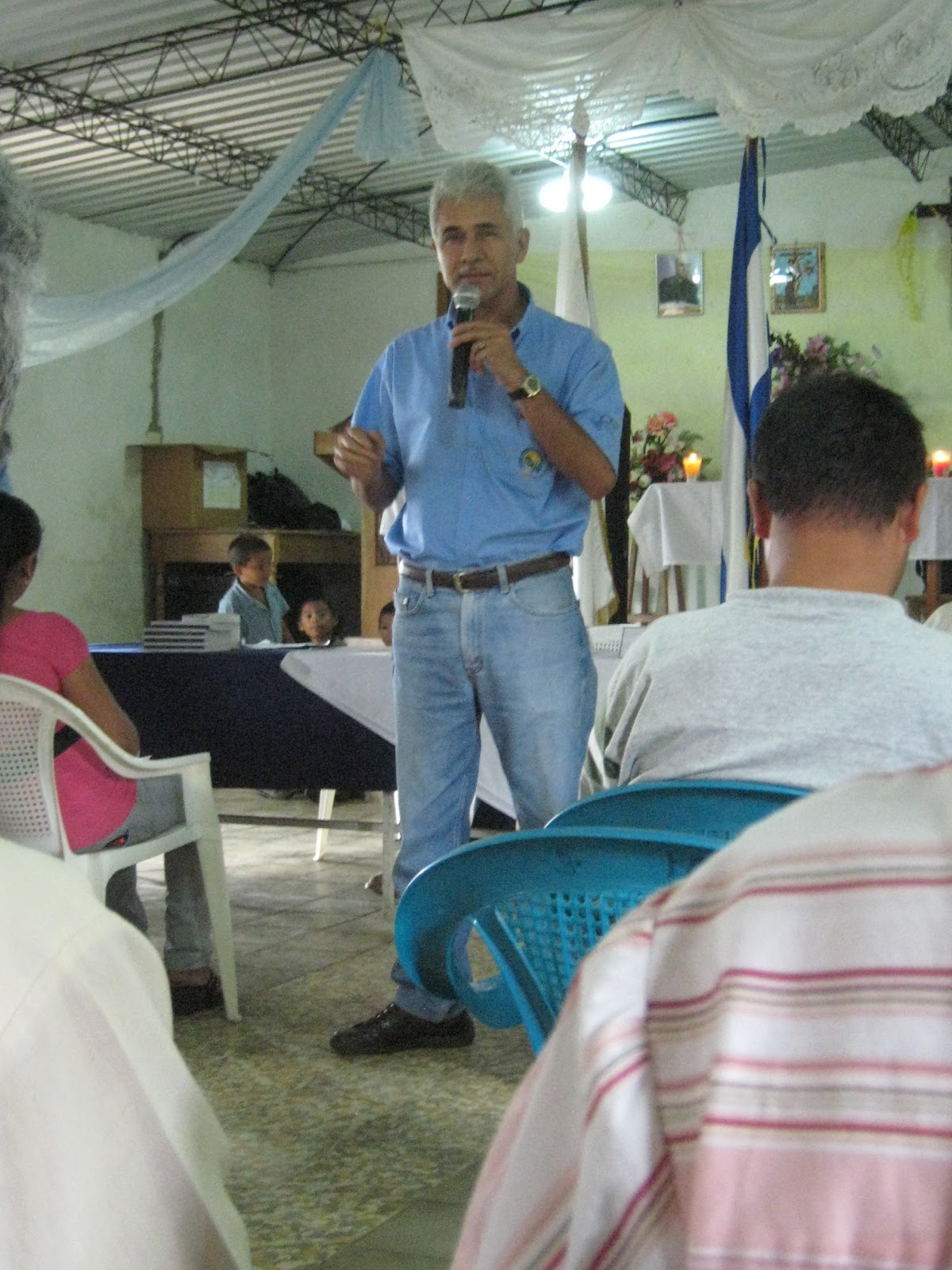
The guy from FONAES talking

Someone from City Hall

The mayor of Berlin

The president of the Directiva

Reading the official act
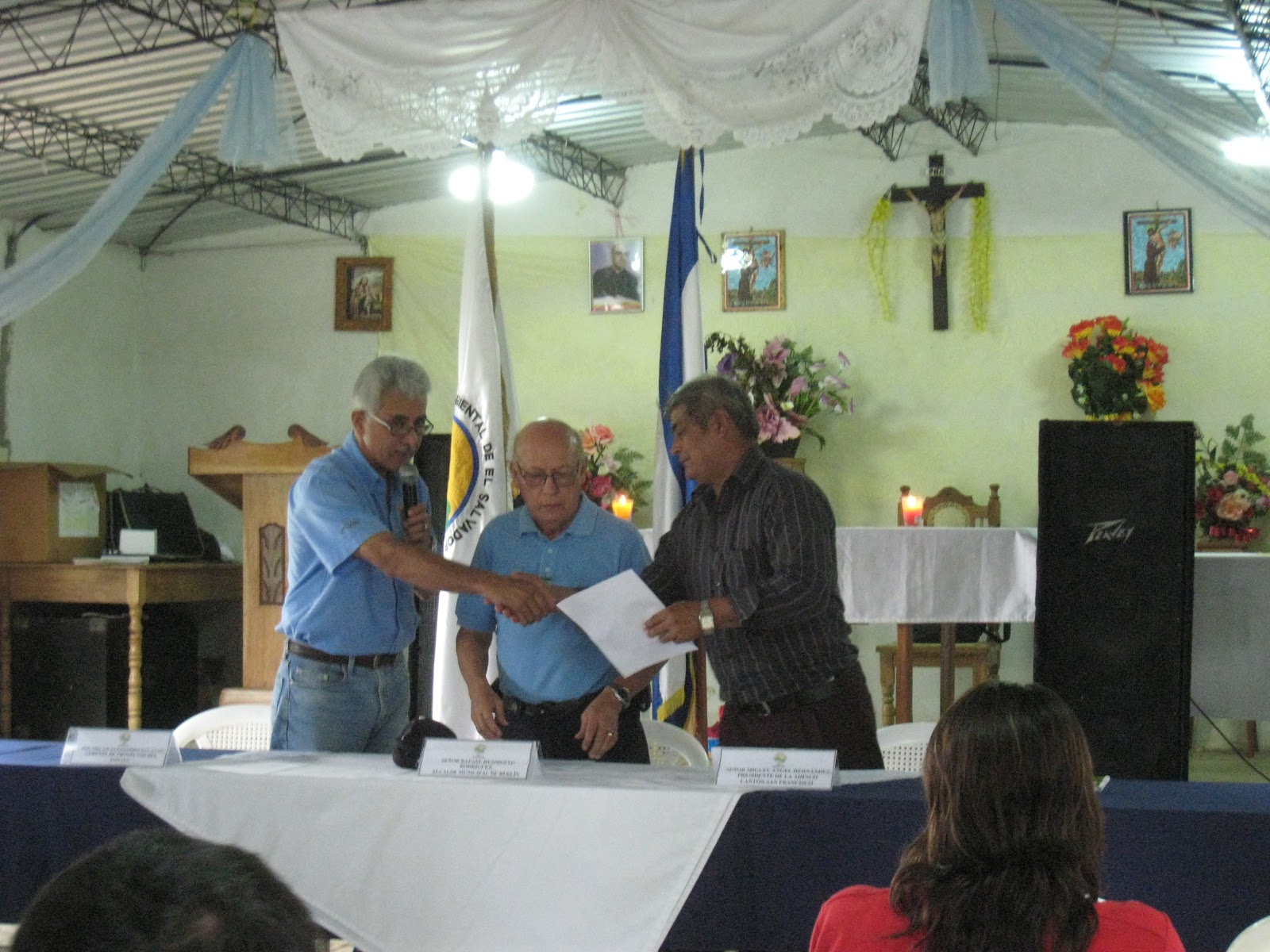
Shaking hands

Some of the members of the committee

Father Jacobo reading from the Bible

Blessing the pole with holy water

The mayor puts in the first bit of cement

Then the guy from FONAES

Next Miguel

Member of the committee

A female member of the committee (one of two)

There's Daniel

Father Jacobo helping out

Reyna being interviewed about the project
Tuesday, September 20, 2011
You know it's wet when...
It’s the rainy season here in El Salvador. You know it’s wet when…
• It rains almost every day
• Everyone is always carrying an umbrella
• Everything is green and lush
• Rivers form in streets and canton roads
• You can’t drive on some canton roads and others disappear completely
• A trip to the cantons when it rains = shoes caked in mud
• Small streams become impassable
• Your feet are almost always wet and/or muddy
• There’s always a chance you’ll get soaked riding in the back of the pickup
• At the sound of rain everyone runs outside to pull dry clothes off the line
• It takes 3 days for your clothes to dry
• Envelopes seals themselves shut from the humidity
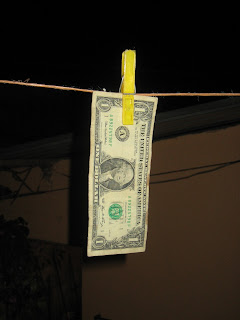
• Mold grows on everything including clothes, shoes, purses, luggage, money. I even saw mold growing on some flowers outside.
• Moss grows on cement making it slippery and dangerous. I have fallen before.
And now some photos to demonstrate:






• It rains almost every day
• Everyone is always carrying an umbrella
• Everything is green and lush
• Rivers form in streets and canton roads
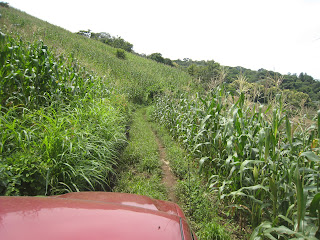
• You can’t drive on some canton roads and others disappear completely
• A trip to the cantons when it rains = shoes caked in mud
• Small streams become impassable
• Your feet are almost always wet and/or muddy
• There’s always a chance you’ll get soaked riding in the back of the pickup
• At the sound of rain everyone runs outside to pull dry clothes off the line
• It takes 3 days for your clothes to dry
• Envelopes seals themselves shut from the humidity
• Mold grows on everything including clothes, shoes, purses, luggage, money. I even saw mold growing on some flowers outside.
• Moss grows on cement making it slippery and dangerous. I have fallen before.
And now some photos to demonstrate:

This is a road

This is usually only a trickle of water during the dry season

Crossing the stream in Alejandria

The yard at the house when it rains

This is why it takes so long for clothes to dry

My money was growing mold

I actually washed it

Even when it's not raining during the rainy season
the roads aren't all that great in the cantons

When it rains and you're outside in the back
of a huge truck you can hold a tarp over you

It was fun the first five minutes under the tarp

Lots of moss

Even more moss

I love all the green

The crops are beautiful

There is a road here
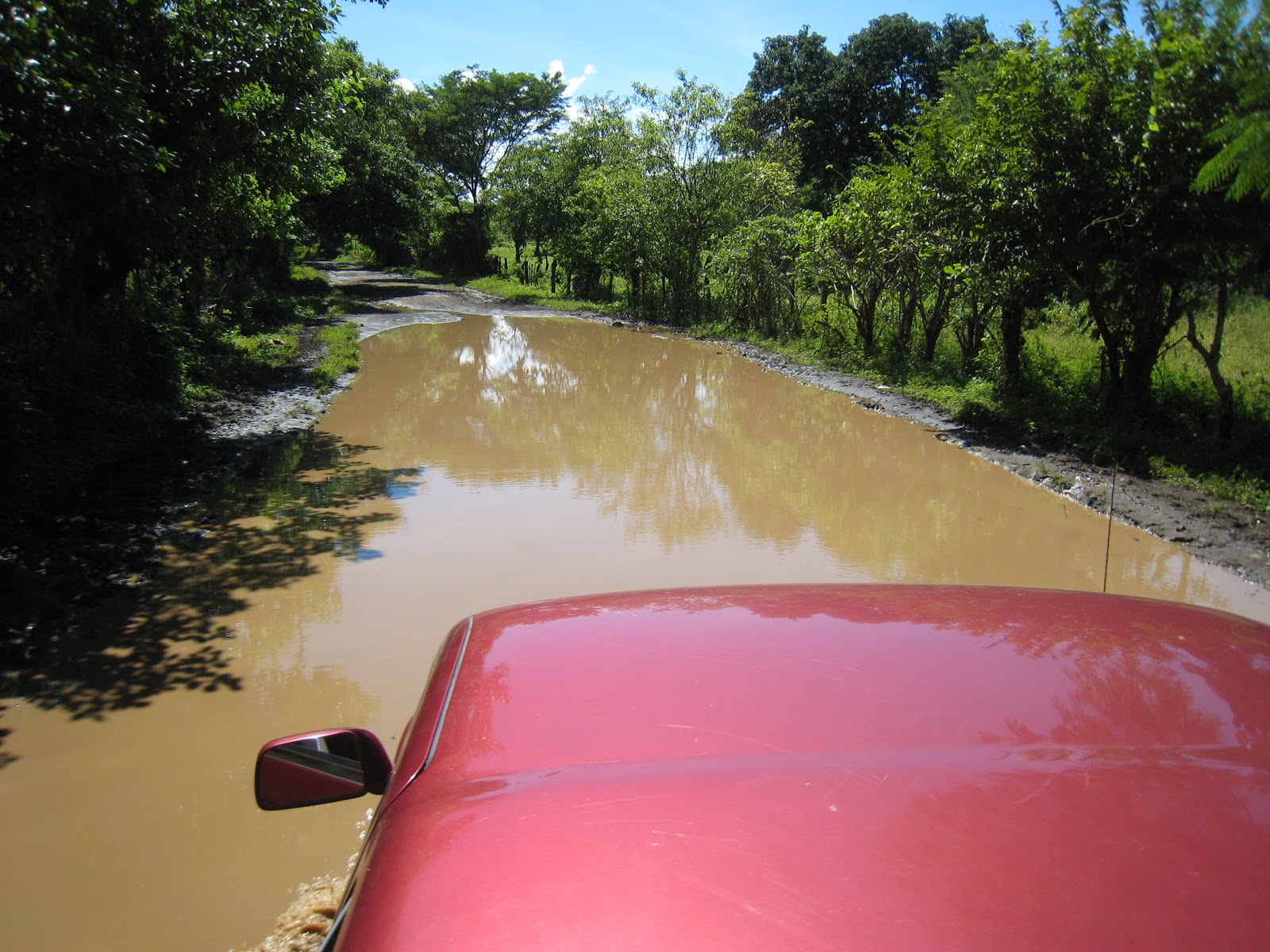
A "puddle" in the road

Mud, mud, mud

A river in the road

More mud

We just hoped the engine didn't flood

Yet another river in the road

Once the truck got stuck in the mud

We had to push it out of the mud

Miguel had mud-covered shoes

This was after the inital rinsing of my feet
Subscribe to:
Posts (Atom)