Showing posts with label Corozal. Show all posts

Saturday, June 18, 2011

Civil War testimony: A campesino & a priest

Thursday, 6-16-11

This afternoon we had the opportunity to listen two people who lived through the Civil War in El Salvador that lasted from 1980 to 1992. One of the people was a woman named Perfecta. She lives in the canton of Corozal. The other person was Father Candido who is one of the priests at the Catholic Church here in Berlín. I was excited to hear them as I had never heard their testimonies before. We all gathered in the chapel to listen to their stories.


Perfecta telling us her story  


Perfecta
Perfecta is 65 years old now so she was 34 years old when the war started in 1980. She said that the suffering began in the 1970s. The armed forces began to repress organizations that were trying to better the lives of the poor. The armed forces came to harass her as well, holding a knife to her throat. In 1980 she lost her husband; he died in combat. At that time she had 7 kids, the oldest was 14 years old and the youngest was 6 months. After that her house was bombed. In 1983 she lost a son in combat and in 1987 another son was killed by a bomb.

She said that people suffered a lot during the war. People were wandering around in the mountains hungry, without sleeping, and without much clothing. People would sleep on the ground and get very sick. Because it wasn’t safe to walk during the day they would often walk only at night. They also moved around a lot because it wasn’t safe to stay in one place too long. She spoke of a certain period of time when they moved around a lot. There was one place where the guerillas moved all the civilians. But the armed forces discovered them and many people died, including children.

During this time it was hard to make food. They got some corn from the guerilla camps and when they were lucky they got to eat twice a day. Perfecta was a cook for the guerillas. Each day they would have 2 cooks and each cook would make 80 tortillas a day. The guerillas were people young and old, male and female. With the guerillas were babies, children, youth, adults, and older adults. Perfecta’s children were also combatants during the war, including her daughters. One of her daughters took up arms at the age of 10.

Lastly, she talked about her family. The early 1980s were the hardest for her because her children were still growing and she lost her husband. During the war Perfecta would carry her smallest child, 16 months old, through the forest. She saw relatives, along with their entire family, killed. People were killed and their bodies left in caves. They were very hard time. She ended by telling us that she has 5 living children.


Perfecta by the garden at the house 


Blanca
Blanca shared just a short snippet of information with us to help explain the conditions prior to the war. Blanca said that every Salvadoran has their own story of what happened during the war. She says she believes the war began because of injustices. Things started heating up in 1932 during a massacre of several thousand peasants called La Matanza. In the late 1970s people started organizing themselves to try to better their lives. At that time there was almost no work, no good health care, and the owners of the land people worked were bad. Blanca’s father has talked to her a lot about the war. He worked on a finca (coffee farm) during the week from 6am to 6pm earning $5.75 a week.

One family was the owner of most of the land in Berlín, and they would threaten the peasants that worked the land, just like in the rest of El Salvador. The few people who owned a small chunk of land often had to sell it. Thankfully, Blanca’s family still owns the land they had during the war. That’s why people organized in the 1970s and the war began in 1980, she said. People were looking for a just life where everyone could share: land, food, life, and love; which is what Jesus wants. 


Listening to testimony


Father Candido inside the chapel


Father Candido
Father Candido grew up José Candido Ramirez. He lived with his parents and 7 older brothers in extreme poverty. He was the only one of his brother that got to go to school. In 1968 he entered university to go into seminary. At this time there were some problems and tension was mounting which eventually led up to the Civil War. Many organizations were forming and movements started growing in the universities. He was the seminary in San José when the school was forced to close because of “ideological problems.” So everyone who was in seminary there was sent abroad. Father Candido was sent to a city call Morelia in the state of Michoacán in Mexico from 1974 to 1975. (At this point I got excited and interjected because I had been to Morelia a few years ago and several other cities in Michoacán). By 1976 they reopened the seminary in San José and he returned to finish in theology.

Father Candido was in his fourth year of seminary on March 24, 1980 when Oscar Romero was shot. Romero was to be buried on Palm Sunday. Shortly before this happened a bishop had called Father Candido (who was a deacon at the time) and told him it was urgent he become a priest. A mere five days before Romero was buried Father Candido was ordained as a priest. He couldn’t tell anyone that he was being ordained that day. After his ordination he spent April through August 1980 in seminary (Monday to Friday) and in a parish (Saturdays and Sundays).

At this time in Ciudad Barrios there were 5 priests being harassed (by soldiers). As a result of the harassment the priests left Ciudad Barrios and Father Candido went to take over. There was another priest there but he talked too much about the war and verbally attacked the army and government so the Bishop moved him. But Father Candido remained there with the Carmelite nuns.

For two years he took care of five pueblos (little towns) in that area. It took one hour to walk to one of the places so the bishop gave Father Candido his jeep to use. Then another priest that was in a nearby area had to be moved because he was being harassed (by the soldiers) so Father Candido had a sixth pueblo to take care of.

In 1981 and1982 the war really got started. The guerillas were hiding out in different places and the armed forces were going town to town ending in Ciudad Barrios. There was a 1-day combat where some of the soldiers dressed as women to escape being detected by the guerillas. Many of the soldiers were captured. But the guerillas wore the army uniforms they’d stolen so it was hard for Father Candido to tell who was who. Then the area was a free zone for a while. The Salvadoran army began to get better trained. The Rapid Deployment Infantry Battalion was formed. The army would go from town to town robbing things and when they were gone there was nothing left.

When the war was in full swing there was almost no transportation in Ciudad Barrios; there were only 3 cars. But people really needed transportation. One time they somehow fit 13 people in and on his jeep. In the rainy season people got soaking wet. But people didn’t want to be walking the streets. If there was a fight between the guerillas and the army then people would wait inside their homes. Father Candido said the jeep he drove made a really loud noise when he drove it so he couldn’t always hear when a fight had started.

Father Candido said that his job was to provide moral support to people during the mass. His duty was to accompany people in their suffering. He said the armed forces would go into people’s houses to demand food and take what they wanted. Most of the suffering came from the armed forces and not from the guerillas.

At this point Father Candido told us about one of his strongest experiences during the war. He was driving his jeep and went through a town where there had just been a battle. He said it was like a ghost town. The guerillas were stopping cars to have them help transport people who were injured. The guerillas ordered him to stop and turn off his car. Unfortunately, his car wasn’t running well and he knew if he shut it off that it wouldn’t start again. They let him leave but one of the guerillas went with Father Candido.

Then they approached a second area with injured people. He was stopped again and three injured people plus a few other guerillas and their 35 pound backpacks were loaded into his jeep. It was too much weight and a tire blew. There was no place to replace the tire so the guerillas left and carried the injured away in hammocks.

The next day the army came by at 6am. The saw Father Candido’s car and the blood in his car and asked who it belonged to. He said it belonged to some people who were injured. They decided to take Father Candido with them and leave the car behind. They walked 2 kilometers to where a helicopter was waiting. They told him this was done for his security. They boarded the helicopter and started to make their way to a base. Along the way one of the people suggested they push him out of the helicopter. They also made a stop to pick up Colonel Domingo Monterrosa (the mastermind of the El Mozote massacre).

They arrived at the army base around 11:30am and the officers began to interrogate him. They asked him who he was, why he was in that area, and who he helped. They wanted the names of people who knew him so they could verify who he was. After 2 hours of questions a new guy came into the room, this time with a recorder, and asked him the exact same questions. That lasted until 6pm.

The army told him that the bishop he knew couldn’t come because there was a fight in the area where the bishop was. They asked if there was anyone else he knew that could verify who he was and pick him up. He told us that his mind went blank and he couldn’t think of anyone. Then he thought of an old priest he knew. At 7:00pm he told them about the priest. He was taken to the luxurious office of a captain where he got food and water. They said someone would be picking him up soon. There they made him sign a paper saying that they had treated him well. He was eventually released from the base camp.

A few days later he was in Ciudad Barrios and saw Domingo Monterrosa again. Father Candido told him that he’d lost things, including his jeep. Monterrosa told him not to worry and that he’d get his things back. When the soldiers gave him his jeep back it had no tires and no battery. The nuns said they’d tell the bishop about it. Shortly after that he had spent 2 years living in Ciudad Barrios as the only priest and they finally sent a second one. And with that Father Candido finished his testimony.


Father Candido at the Pastoral House


It was a wonderful experience hearing their stories. I’ve heard civil war testimony from many other people but, as Blanca said, each one is unique. I’m glad I had the opportunity to hear their testimonies. It gives me a better idea of who they are as people. It’s one thing to know who someone is, share a meal with them, or visit their house. But hearing about their experiences during a brutal civil war gives you amazing insight into their life and their mind.

*Photos taken by TJ


Saturday, March 19, 2011

Day with the Dentistas!

 Thursday, 3-17-11

I had an exciting day today with the medical delegation in Corozal! I got to spend the day in the dentist area translating for several of the dentists. Yesterday I spoke with Kathy because I wanted to learn about what the dentists did at the clinics. I talked to Tom, who had translated before for the dentists, about what words and phrases I needed to know. I also talked to one of the dentists, Brad, about what I needed to know. I wrote down what they told me and when I got home I looked up all the words and worked on the phrases. I had my little cheat sheet if I needed it and I had Kathy look at it to give me some tips as well.

Some of the words I needed to remember were: tooth, toothache, gums, swelling, inflammation, numb, mouth, sleeping, injection, pressure, tongue, bleeding, medication, pharmacy. Some of the phrases I needed to remember were: open your mouth, close your mouth, does this hurt, raise your hand if you have pain, your mouth will go to sleep, do you feeling anything in your tongue, the dentist needs to fill your tooth, the dentist needs to pull your tooth, the dentist will give you an anesthetic, hold this gauze, only eat soft food, etc. I knew a lot of the words and phrases already but I had to look up the rest. It was a good way for me to learn several new words. I even learned a new verb today: to spit (escupir).

To start, I was working with one of the dentists on an older woman. She had numbed the woman and given her an injection and then the generator which powered the drilling machine broke. I’m not sure exactly what happened but we didn’t have power for about a half hour. She seemed a little nervous so I talked to her about her family, their crops, the war, the new church in Corozal, and the Bible. I usually don’t talk too much about the war or religion unless I’m sure the person is comfortable but she actually started telling me about the war. She talked about poverty before and after the war, the poor quality of the crops this year, and all the things that were prophesized in the Bible coming true. This seemed to relax her so I just listened.

They finally got the generator started and we were back to work. The woman told me that the first time she had a filling she didn’t have any anesthetic. Yikes!! I told her the shot would help a lot and she shouldn’t feel pain but might feel some pressure. She did well and the dentist was able to fill her two cavities without any problems. I felt better after translating for my first patient. I was worried that I’d botch something huge but it turned out fine.

The next person I translated for was a 3-year old boy. He was probably the bravest person I saw all day. He had to have several injections and didn’t cry at all. He didn’t even cry when he got one into the roof of his mouth which is especially painful. He had to have four teeth pulled. Ow! This was the first time I’d even seen a tooth being pulled. It was gross and interesting at the same time. My stomach felt a little weird at first but that soon passed. Afterwards he held the gauze in his mouth and got a sticker. What a brave little guy!

The next woman was older and seemed concerned about having her teeth pulled. I talked to her and held her hand. The dentist would say something and I translated for her so she’d know what was going on. She almost got weepy at the end but she did well overall. It’s definitely understandable that someone would be afraid of having their teeth pulled out. I have a reoccurring nightmare where my teeth are falling out. I’m not sure exactly what that means. But I do know that I’m always terrified in the dream.

Then I translated for the little 3-year olds dad. We told him that his son did well so he’d probably do well too. And he was a trooper. He had two teeth pulled and ended up needing a few stitches because of all the bleeding. That was interesting to watch. One thing I noticed was the smell of the blood. I’m not sure exactly what it smelled like but there was a distinct odor when I was close to people who had some teeth pulled. Maybe iron or halitosis? Of course, I didn’t say anything. That’d be extremely rude. Plus, my mouth would also smell funny if I had teeth extracted.

The next case was harder. The little girl was 9 years old and needed to have a couple teeth looked at. The dentist explained to me that she didn’t know the extent of the damage of the two problem teeth (no x-ray machines here). She would have to drill and find out how deep the cavity was. If it was too deep to fill then she’d need to have them pulled. I explained this to the mom and she seemed a little hesitant. She didn’t really want to have them pulled. I had to explain to her several times that the tooth really needed either a filling or to be pulled. I then explained that they were baby teeth and would fall out eventually anyway. She was satisfied with this and gave the dentist permission to pull the teeth if need be. It was a good thing I explained many times because the two teeth did need to be pulled. I also learned a new word: baby teeth = dientes de leche (literally translated- milk teeth).

The little 3-year girl I had next was the hardest. She needed to have two teeth pulled. She did well with the numbing gel and with the first injection. However, when it came time to give her the second injection as soon as the dentist put the needle in her mouth she starting squirming and he had to take out the needle. I tried explaining to her that it would only take a little longer and that it would help her not have any pain. But she kept her mouth clamped shut and wouldn’t open it. Eventually, she ended up laying down on the laps of her mother and the dentist so he could give her the last injection and pull the two teeth. She was not happy about that and cried quite a bit. I felt so bad for her and sad that I couldn’t help more. But it was a relief that the dentist was able to pull the teeth and prevent future problems.

After that we had a break for lunch. We drove a short distance to Wilma and David’s house to eat. I was excited to see them again. They greeted us with big hugs that always make me feel very welcome. We had chicken, vegetables, tortillas, and pasta salad. It was delicious and I quickly ate all my food. We all sat around and chatted for a while. The Wesley group from the University of Iowa was there as well and it was nice to talk to them. But soon we had to head back to work. I hugged Wilma & David goodbye and said I hoped to see them soon.

When I returned I started helping with a 12-year old boy who needed a filling. He did really well and the dentist was able to finish up quickly. Next was a 12-year old girl. She came in alone and was carrying a purse. I instantly knew I liked her because I could tell she was independent and determined. She got a little scared when we were doing the injections but stayed strong. The dentist was trying to hide the needle from her before the injection but she was too smart. I gave her my hand and she squeezed it as tight as she could. She had to have three teeth pulled but they were all baby teeth. One of the teeth was preventing a permanent tooth from growing into the right spot. After the first tooth was pulled I gave her a sticker. She got another one after the second and one more after the third. When we were finished she put them all on her purse, thanked us, and strode out of the room. What an amazing young lady!!

We had another little girl after lunch who needed to have three teeth pulled and was afraid to get injections. For a while I didn’t know if we’d be able to finish because she didn’t want to open her mouth. But we managed to coax her into opening her mouth. I told her and several other little girls today how brave and strong they were. Stronger than the boys, I told them. This usually made them smile. The two girls I worked with after lunch both told me they liked math. I tried to encourage them and tell them how impressed I was and said we needed more women in the field of math. I like to encourage education every chance I get.

I realize it may seem odd that children so young need to have their teeth removed as opposed to just filled or left alone until they fall out. Unfortunately, people in the cantons often lack the awareness and resources for proper dental hygiene. A lot of kids have really rotten teeth that have to be pulled. I love seeing the kids in the communities smile but it breaks my heart when I see how brown and jagged their teeth are. I’m glad they’re only baby teeth and hope that by the time they get their permanent teeth they’ll have the means to be able to take of their teeth. I wish it were easier but people here still face a lot of barriers when it comes to healthy teeth and gums.

Next was a man in his 30s. He had two cavities; one was in a tooth in front and another in the back. Similar to a situation I encountered in the morning, the dentist couldn’t tell the extent of the damage so he’d need to drill into the tooth and fill it if he could. But if he couldn’t, then it would need to be pulled. I explained this to him and he looked really weary. So I had a Salvadoran translator repeat what I’d told him because I wanted to be absolutely certain he understood me and know we’d probably need to pull his tooth.

Earlier one of the dentists told me that younger males, the ones who are typically more “macho,” usually have the hardest time with having teeth pulled. And I found this to be true. This man and another guy had a very hard time today. The person I was helping looked like he was about to throw up at any second. I actually moved to the side at one point so I’d be out of the line of fire if he did get sick. The guy in the chair next to him looked like he was going to faint. They had to stop the procedure so he could rest. I felt really bad for him. He looked like I often look when people are taking my blood: hot, nauseous, and light-headed. That’s just not a pleasant feeling.

By the time I left for the day I’d spent about 6 hours with the dentists. I have to say that the dentists with this delegation are amazing! They have so much patience, practice, and a great ability to problem solve. I felt honored to be able to spend some time with them and learn about what they do. They really do a great service to the people here. Plus it was a wonderful experience for me to practice translating.

Later that night, back at the Pastoral House, the ladies decided we should go out to the festival for dinner. It’s been fun being able to go out at night during the festival. There are rides, street vendors, lots of crafts, and a ton of people. We sat down at a table and ordered some food. I ended up having chicken and rice. It was delicious after a long day. After dinner we went inside a store that had been set up for the festival. They were selling jewelry, clothes, key chains, and other trinkets. I ended up getting a colorful, cloth headband that was made in El Salvador. We didn’t make it back home until 10pm. It didn’t take long to get to sleep.


Squeezed into the backseat


The set up crew plus some supplies


People were waiting for us


Someone's not happy


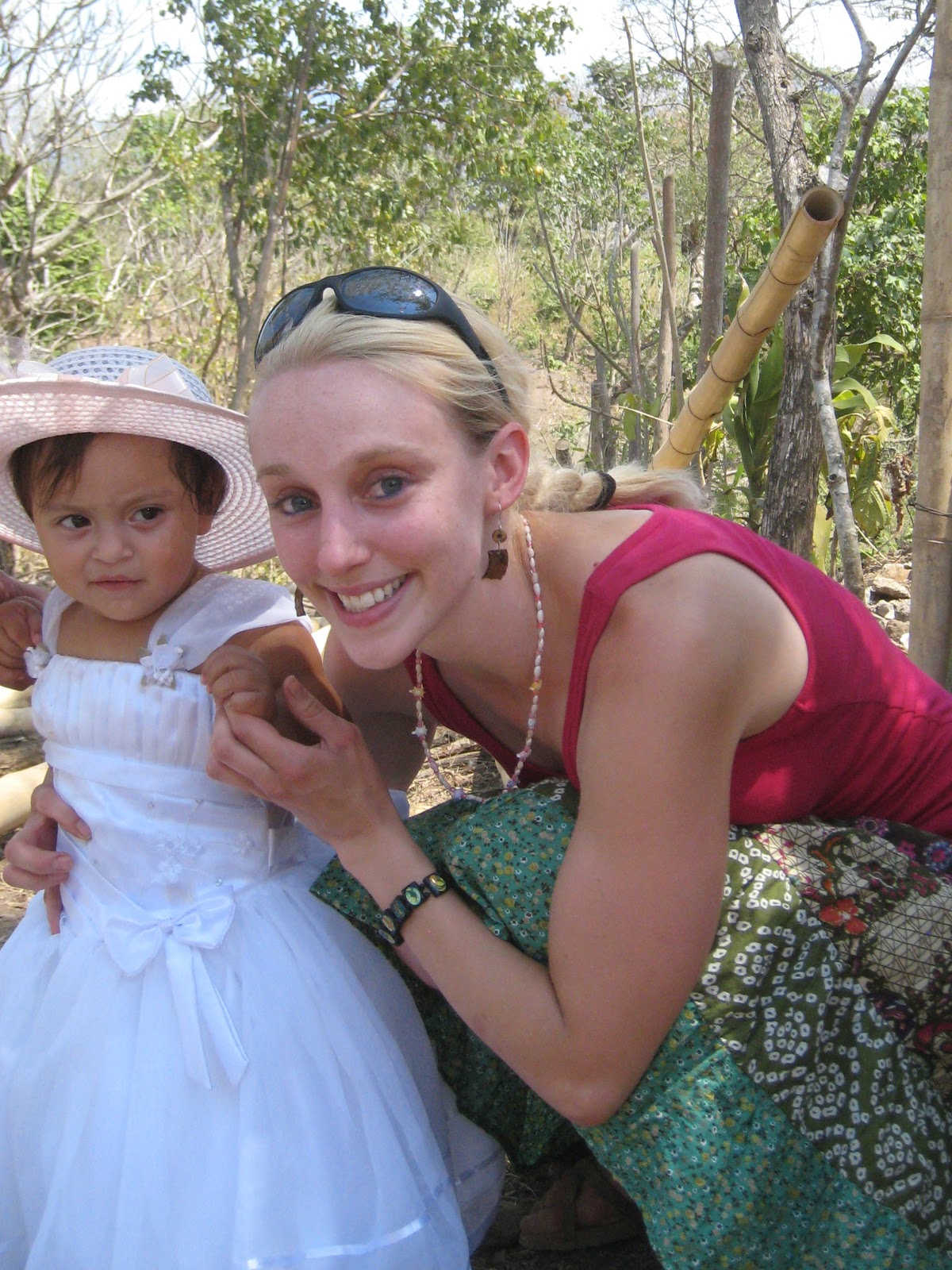
She was a little shy


All dressed up to see the doctor


This woman came to the dentist later on


Waiting to be seen


Kathy and her kids


It's Bob!


The medical delegation sees a lot of people


Bathroom at the school


The school has solar power


Swingset fun


Beautiful little girls


The dentist area being set up


There were four stations for filling and pulling


Gloves, gauze, cotton swabs, etc.


Dental instruments


The bowls in back are used to clean the tools


The rest of the group arrives


Trying to fix the generator


Our first patient


The three year old boy


Pulling teeth


1 dentist, 1 assisstant, 1 head holder, 1 translator


She needed 2 teeth pulled


A brave little girl


The machine used for fillings


Lots of activity in the room


She wanted nothing to do with having teeth pulled


Quick break for lunch


No, Pedro, you cannot pull out my teeth


This poor guy had a hard time


She had a lot of teeth pulled


9 bad teeth


I gave her stickers and talked to her,
but she didn't want to talk


Cleaning the instruments so they can be used again today


The dentists in action


He had to have a front tooth pulled


She did her best not to cry


Bravely awaiting the injections


What an adorable little girl!


Saying goodbye to people


Tuesday, March 8, 2011

Corozal celebration

Sunday, 3-6-11

The festivities have officially begun. Last night was the election of the queen of the patron saint festival. We all went out to see some of the candidates and listen to the music. Well, the celebration continued well into the morning because at 1:15am I heard them setting off cohetes, which are loud noisemakers that sound like fireworks. At least 20 of them were set off and I kept looking over at Paige to see if they were going to wake her up. Thankfully, she slept through the noise.

We were off to the celebration in Corozal by 8am. The new church that they’ve been working on is finally finished. The church is absolutely gorgeous and has a distinctive look to it. The structure is unlike most other churches in the cantons. We walked in and immediately saw the beautiful tile that David had picked out a couple weeks ago. The church was decorated with flowers and curtains. At first we just stood at the back of the church taking it all in. Soon we were invited to sit in the chairs at the front of the church. Delegations are always treated with great love and reverence when they visit the churches in the cantons.

I went outside the church for a while to see what the women were preparing for lunch. There were at least four huge metal bins full of soup. It was enough to feed everyone who came to the celebration. I always watch in amazement at the women who do the cooking for these events. In this case I believe it was women of Corozal who were making the food for the lunch after the celebration. They work so hard for everyone else and sometimes I think we forget the people working in the background. The ladies of the Pastoral Team were also cooking. They helped for a while at the church and then went to Vilma & David’s house to make lunch for us and some of the people from city hall. As with many events, when the special day comes, the women often miss the celebration so they can prepare lunch for everyone else. They really sacrifice so that everyone else may have a wonderful day.

The mass began around 9:30am. Several priests were there from other communities to perform the mass. It was similar to a typical mass but with extra exciting events. At one point one of the workers, Santos, who helped a great deal with building the church got up to speak. His home next to the church is very humble in comparison. It is like most of the homes in the cantons with a dirt floor and leaky roof. When he spoke today you could see his whole face was lit up. He made grand gestures with his hands as he spoke about how much the church meant to him. His words were so filled with love and joyfulness that we were moved to tears. At one point he became choked up as well and almost cried.

Next came the blessing for the church. I remember when the church in San Francisco was built and that the priest there blessed the church as well. This priest blessed a guacal (plastic bowl) full of water at the altar. He took a palm frond and sprinkled water at the front of the church. Then he went around and blessed the people inside the church. What a beautiful tradition! This is only the second time I’ve ever seen a church blessed in that manner. I remember when it was done in San Francisco I was disappointed because I wanted to get wet but didn’t. This time some of the blessed water did land on me so I was pleased.

I had noticed at the beginning of the service that there were several babies dressed in nice clothing. I asked Kathy if there were going to be some baptisms and she said yes. Yay!! This just makes the first service in the new church even more wonderful. When it came time for the baptisms many more families went up to the front than I expected. At least 10 people, mostly children, were baptized today in the new church. The priests said a few words and then everyone moved over the baptismal font. It is the same baptismal font that was in the old church that was destroyed during the war. I felt full of happiness as I watched everyone get baptized one by one. Afterward each family lit a candle they had brought in honor of the baptism. It was a long process because there were so many people who wanted to be baptized. How exciting!

Offering and communion came next. As with the other Catholic churches I’ve been to in El Salvador, I was allowed to take communion. Everyone is welcome to take communion in the Catholic Church here regardless of whether or not they’re Catholic. We are all brothers and sisters of Christ and therefore we may all share in receiving the blood and body of Christ. We all got in line to receive the first communion in the new church. I felt honored to be a part of such a special day for the community.

Finally, Brenda was asked to go to the front of the church and say something. Brenda is a member of Ankeny Presbyterian Church that partners with the canton of El Corozal. She made a special trip down here just to be a part of the celebration. Brenda spoke about how excited she was for the new church and recalled the struggles of the people as they waited several years before they were able to build. She presented the community with several small Bibles in Spanish and a memory album she had made full of pictures of the construction of the church. The memory album also contained several letters from members of Ankeny Presbyterian.

After some final words from the priest the service ended. We all spent a little time in the church afterward talking with some of the people and holding the adorable babies! We eventually left the church and walked over to David & Vilma’s house a little before noon. There we ate lunch around a large table outside. It was wonderful to see them and to be at their home once again. I didn’t get any organs in my lunch this time and was a little disappointed (not really).

As we were finishing up lunch we heard the youth group from El Recreo performing at the church. We wanted to see them so we hurried over. We were able to catch the last five minutes of the performance. They had new costumes this time because the Pastoral Team donated fabric to the group. They were even more beautiful than the last outfits. When they’d finished and went behind someone’s house to change Kathy managed to get them into a group so we could get a few pictures. Then we got to meet everyone! Several members are part of a group that takes English classes from William and several other teachers on the weekends. We chatted a little with them in English and were impressed by how much they already knew!

We said goodbye to the group and made our way back to the house. As we left one of the moms of the little girls who was baptized wanted to talk to me. At first I thought she wanted me to take a picture of her daughter. But that wasn’t what she wanted. Her friend came over with a camera and I realized she wanted to take a picture of me with her daughter. It may seem weird that someone would want to take a picture of their child with a complete stranger, but us gringos are pretty novel creatures.

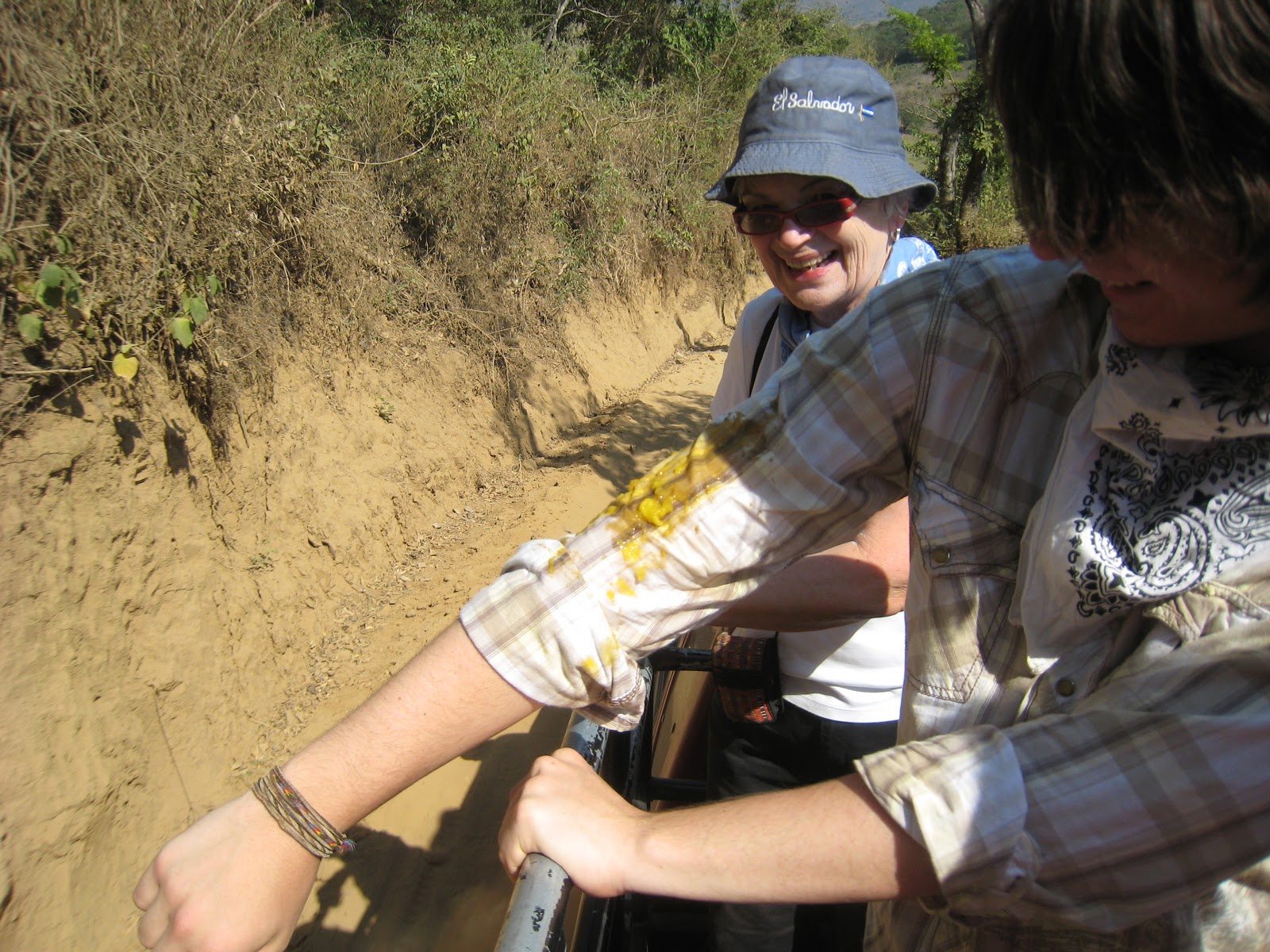
When we got back to Vilma & David’s house we spent a little more time in the hammocks relaxing. It’s such a peaceful place to be. I am very glad I’ve had the chance to meet both of them. Around 2pm it was time to head back to Berlín. We hugged everyone goodbye and were on our way. As we were driving home on the bumpy roads a mango fell from a tree and we heard a loud “thump.” We realized that it had hit Luke in the arm and his shirt had a big yellow splotch on it. Delicious. Thankfully, he wasn’t hurt and said he really didn’t feel the mango hit him. It must have been pretty squishy.


The new church in Corozal


Brenda in front of the new church


First glance inside


The altar


Not sure who this person is
(Cecilia didn't know either)


Little girl at the mass


Cooking outside for everyone


The church quickly filled up


A little girl sitting near me


The beginning of the mass


Santos talking about building the church


Blessing the church & water


Sprinkling water everywhere


And on everyone!


The baptisms begin


He was in a little suit


Waiting to be bapized


A special blessing


One of David's godchildren


So cute!


Going over to the baptismal font


Getting baptized


Preparing for communion


Paige and Luke taking communion


Brenda speaking to the community


Showing them the Bibles she brought


The memory album she created


This was an important day for her


Filled to the brim


So sweet!


I got to hold him


The youth group performing


In front of the church


The leader


Dancing


The whole group


One of the young ladies I talked to


Great outfit


Pretty hat


She has a beautiful outfit


After everyone had left


Close up of the tile


A hammock built for two?


Out like a light


At first we thought his cup was full of pop


Hola Martie!


Pastor at rest


Not quite asleep


Hanging out after lunch


Nice mango goo on your shirt


We got home at 3:30 and cleaned up a bit before heading out for more ice cream. We got ice cream and then walked around the market for a while. It was pretty quiet at the market since it was late in the afternoon. But it was nice for the first-timers to be able to see the market area. We went on a hunt for a Salvadoran flag and ended up finding it at a shoe store. That’s pretty typical. We couldn’t find it at the school supply areas but the shoe store had them.

We got back home and had a final meeting at 5pm for everyone to say thank you and reflect on the trip. I’m going to miss this group a lot! It’s hard to say goodbye to people that you’ve become so close to in a short period of time, especially when you truly enjoy being around them. Toward the end of the meeting a former priest came to the door to say hello. He was working in Berlín when Bob Cook first decided to come down to El Salvador. He commented on how amazing it was that the Pastoral Team and ourselves, Catholics and Protestants, could work together toward a greater good. He then quoted for us a line from Spiderman and then a line from the Bible. That takes serious talent.

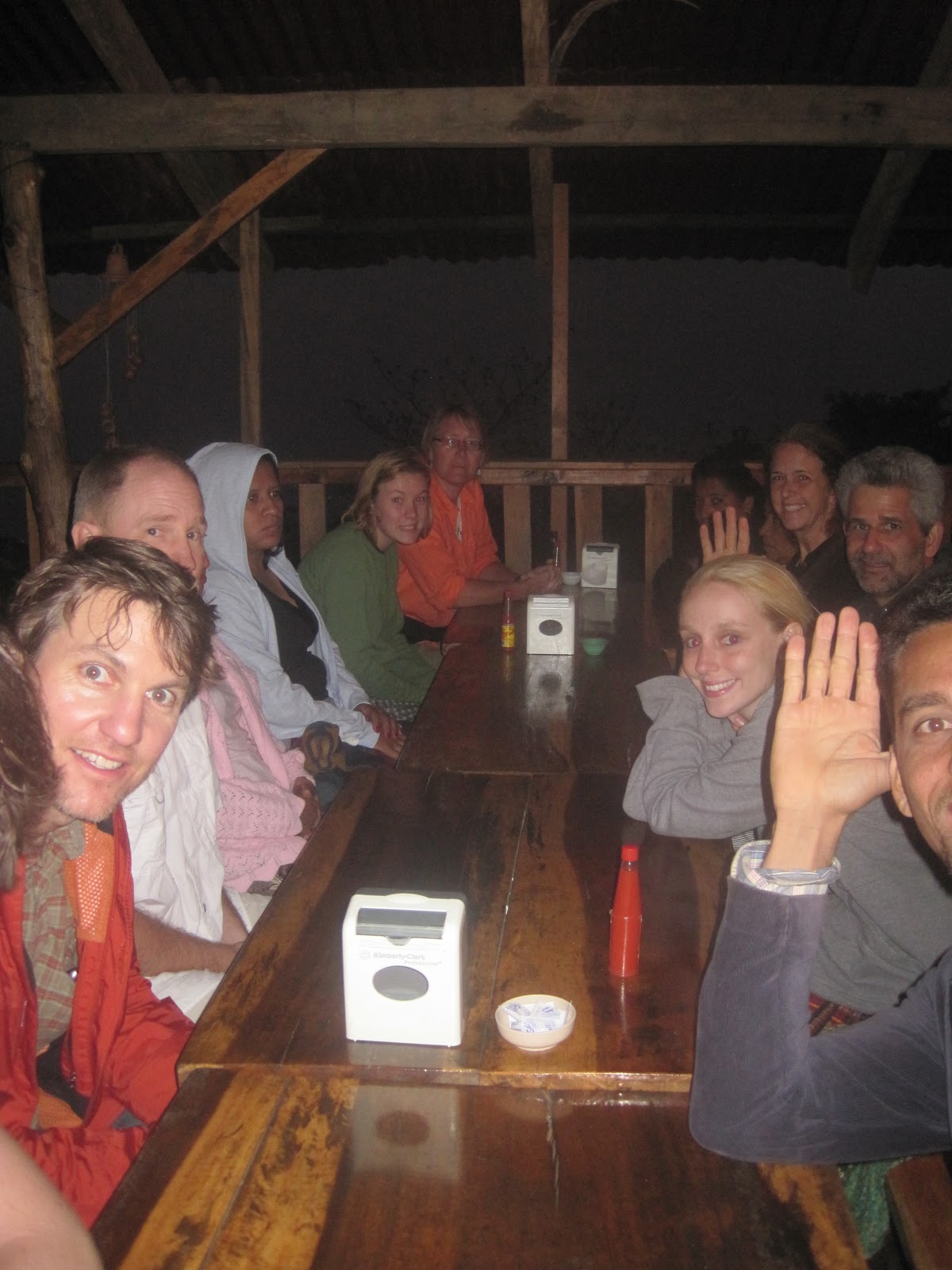
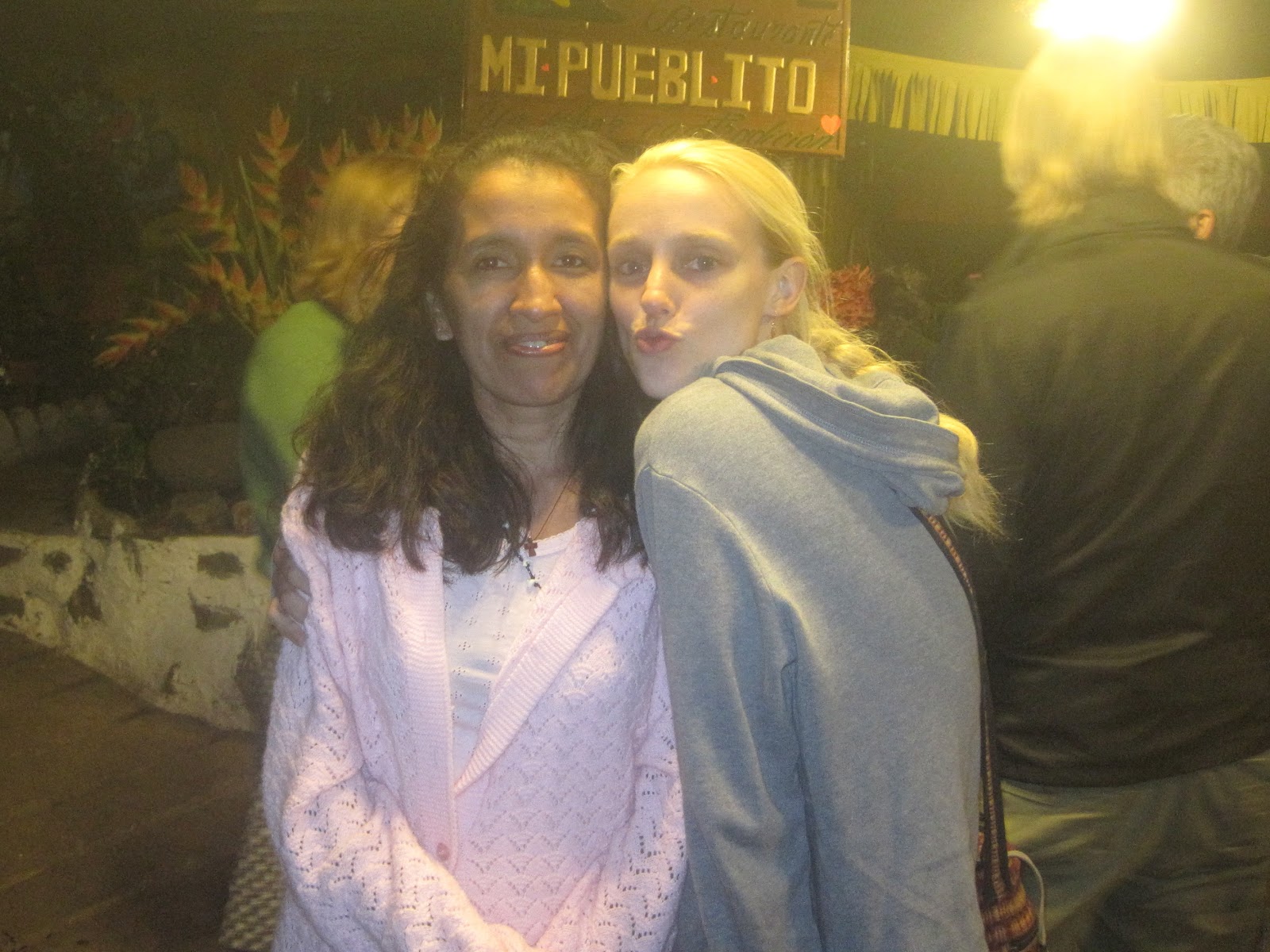
It was time to head to Alegría for dinner a little after 6pm. We went to the new restaurant the team has started going to called Mi Pueblito. The food is delicious, inexpensive, and fast. I got the 5 shrimp platter than often comes with more than 5 shrimp. It was tasty and I ate all but one of my giant shrimp. But someone else ate it so it didn’t go to waste. The drive back to Berlín a little more than an hour later was beautiful. I never tire of gazing up at the night sky and seeing all the stars. We may or may not have consumed a few adult beverages when we got home. But it was the last night and we were celebrating. It’s been a great week. We’ll see what tomorrow brings.


Brenda's flag


Luke & his dream car (almost)


Eating in Alegria


Lovely


A cool drink is always nice


What's that you have in the coffee cup?