Showing posts with label Death. Show all posts

Sunday, November 17, 2013

The 9th day

Saturday, November 16, 2013

On Thursday, November 7, a woman from the caserío of Los Cruces in the canton of San Francisco died. Her name was Argelia del Carmen Flores and she would have been 43 years old on November 11. She leaves behind a husband and 11 children and a couple grandchildren.   

Argelia had walked down into a ravine in her caserío of Los Cruces where everyone in her caserío goes to get water. The climb down is difficult and walking back up with a large cántaro full of water is even more difficult. She was at the bottom filing her cántaro (water jug) for her family. She was accompanied by several other people. Out of nowhere came a landslide. Earth and large rocks fell on top of her and killed her. I’m not sure if she was killed instantly or if she lived a short while after that.


Argelia's family on November 9
 
Argelia’s funeral was on November 8. Today, November 16, is the ninth day of her death. For Catholics in El Salvador that means there will be a vigil. Since Argelia died outside her home, there was going to be a procession from the place where she died to her home. Then the family and friends will stay up all night singing and praying.
The Pastoral Team made the decision to go visit the family. Since the family doesn’t have much water, the Pastoral Team took a large tank full of water for the family. They also took tons of flowers for the altar they would be setting up inside the house to honor Argelia.
We piled into the truck around 10:00am and headed out for San Francisco. Argelia’s husband and one of her son’s were with us. Thankfully, we were able to take the direct road to San Francisco instead of the other road which takes about 2 hours.
When we got out of the truck we were immediately surrounded by kids. Wherever we go to San Francisco there are always lots of kids following us, but especially in the caserío of Los Cruces. I got out my camera and started taking pictures. The kids loved having their picture taken and were soon posing and asking me to take more pictures of themselves and of other things. It was good to see them smiling, especially Argelia’s kids.
One of the girls brought over the picture of her mother. She and her sister talked a little bit about their mom. They brought over another picture and explained that it was of their mother and her daughter, Lupe’s, first communion. I also talked briefly to Argelia’s mother. She told me that Argelia had 13 children, but 2 twins died when they were young so she now has 11 children.


Argelia's daughter, Lupe
 

Argelia's son
 

Sitting on the pickup


Posing for pictures
 

Very cute!
 

A good-looking group
 

Argelia's youngest daughter, Paz del Carmen
 

Take a picture of the pig!
 

All in the truck
 

Argelia's mother
 

Beautiful girls
 

Now take a picture of the dog!
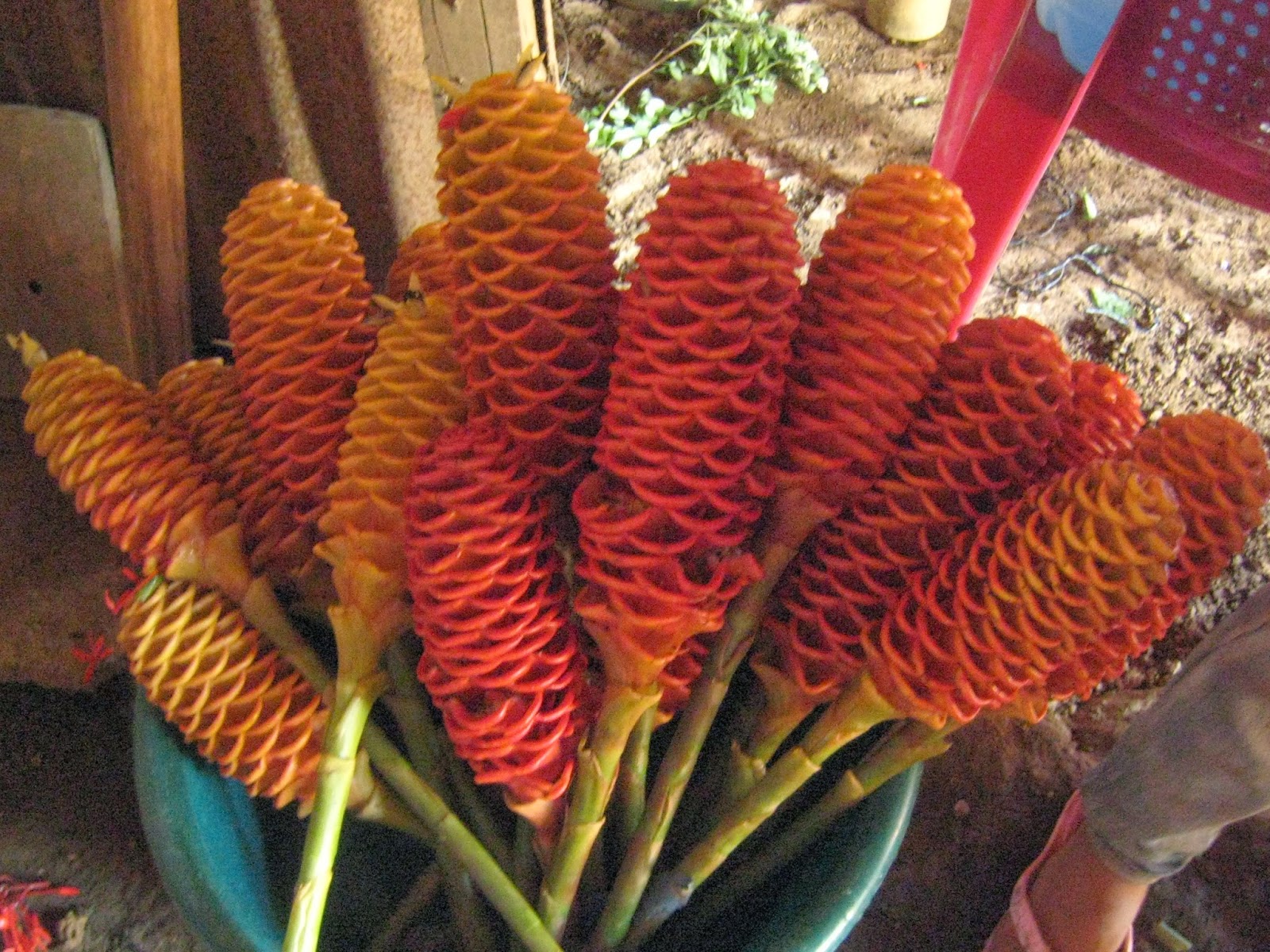
 

Maraca flowers
 

Beautiful!
 
 
Argelia del Carmen Flores
 

Argelia and her daughter, Lupe


As I was chatting with the kids, Blanca and Idalia were helping to create the altar inside the home. Katherine helped with the altar and chatted with the kids as well. After a while, the kids really wanted attention. I showed the Argelia’s youngest daughter how to use my camera. Not a great idea. She wanted to take lots and lots of pictures. I managed to get it turned off and distracted the group by pulling out my notebook. I drew pictures of different things and soon they’d taken off with my notebook to do drawings of their own.  
As soon as Blanca and Idalia finished up the altar it was time for lunch. We were taken next door and a lovely meal of chicken, rice, and tortillas had been prepared. It was an honor to sit inside someone’s home and have a meal prepared for us when it wasn’t our family member who had died. People here are so gracious and so humble. I have learned a lot from them about life.

Little Paz took this picture of me
 

Gathered around drawing pictures
 

Outside scheming
 

The altar in honor of Argelia


Argelia's photo in the middle


When we finished lunch it was time to start the walk down the ravine to the place where Argelia was killed. The walk down was incredibly difficult. Probably one of the worst trails I’ve been on here in Berlin. But Katherine and I figured that if Argelia’s 80+ year old mother and Argelia’s pregnant daughter could do it, then we should at least attempt the walk. We both almost slipped at one point or another. Thankfully, neither one of us fell down.
We finally reached the place where Argelia died. People will still need to return to this place in order to get water for their homes. Daniel, the Delegate of the Word, spoke briefly and then he and Miguel, the president of Directiva, made a hole in the ground and erected a green cross in memory of Argeila. The large rocks that had fallen on top of Argelia were still there. Her daughter-in-law, Patricia, pointed them out to me.
When the cross was in place, we began the slow procession up the hill. People sang and prayed as we made our way up the hill. Katherine and I were toward the front of the group with some of the kids. We walked for about 30 to 45 minutes before we reached the school in San Francisco. That’s where the procession turned to return to Argelia’s house. We said goodbye and that point since we needed to get back to Berlin.
There was so much about the day that made it difficult: Thinking about the kids who lost their mother and the husband who lost his wife. Experiencing the walk to the water source where people have to go in order to get water to drink, bath, shower, wash, and cook. Seeing the rocks that killed Argelia in the same place they had fallen. Listening to Argelia’s mom talk about how her daughter was too young to die. While it wasn’t a pleasant experience, it’s one I hope I never forget.

Following Flor down the hill
 

Very slippery
 

There goes Argelia's mom
 

Crossing the road
 

Listening to Daniel
 

The place where Argelia died
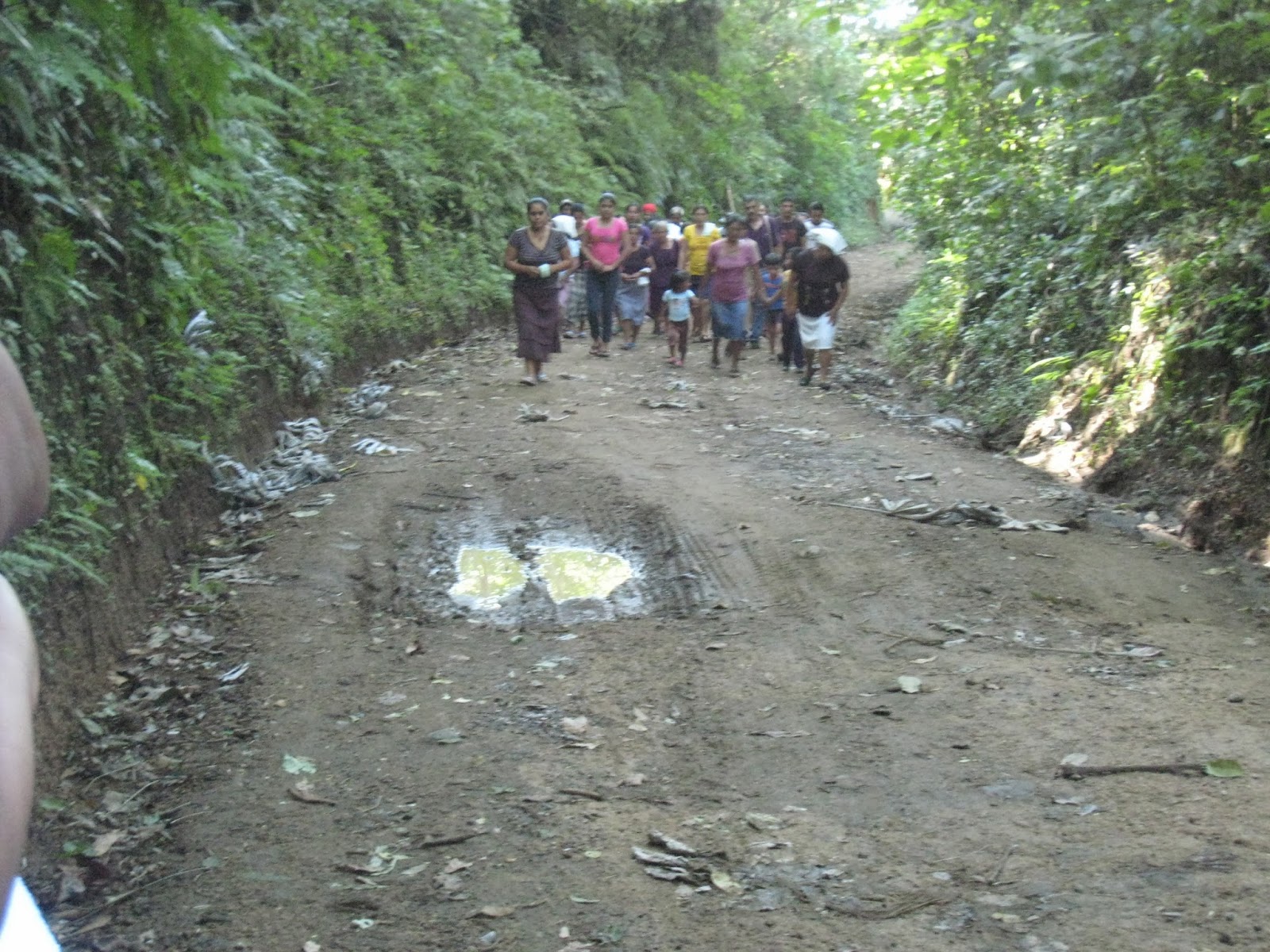
Processing to Argelia's house
 

Tuesday, November 8, 2011

Day of the Dead – Día de los Muertos

Wednesday, 11-2-11

Back when I was trying to figure out how long to stay in El Salvador, the Day of the Dead (Día de los Muertos) figured into my plans. I’d never been to a celebration but I’d always wanted to participate in one. I learned a lot about the Day of the Dead and Latin American beliefs about death in my grad school classes where I studied gerontology end of life care, and death. So when I had the chance to be in El Salvador during the Day of the Dead I leapt at the opportunity.

Origins
I haven’t been able to find information about the origins of Day of the Dead in El Salvador. However, I assume the origins are similar to those in Mexico since El Salvador was also occupied by Meso-American peoples. The Pipils, who are descendants of the Nahuatl-speaking Toltec and Aztec peoples of Mexico, settled in El Salvador between 1000-1500 CE and came to dominate El Salvador until the Spanish conquest in 1524.

The Day of the Dead celebrations in Mexico can be traced back to the indigenous cultures of the Aztecs and other Meso-American civilizations. Rituals celebrating the deaths of ancestors have been observed by these civilizations perhaps for as long as 2500–3000 years. During that time, a month long celebration was overseen by the goddess Mictecacihuatl, the Lady of the Dead.

The Aztecs and other Meso-American civilizations kept skulls as trophies and displayed them during the ritual. The skulls were used to symbolize death and rebirth. They were used to honor the dead, whom the Aztecs and other Meso-American civilizations believed came back to visit during the month long ritual.

In the 1500’s the Spaniards arrived in Mexico and brought along their Christian beliefs and traditions. Because the Spaniards wanted to convert the Aztecs to Catholicism, they tried to abolish the rituals dedicated to the dead. However, attempts to abolish the Aztecs’ festivities and traditions failed, so the Spaniards moved the date of the rituals so that they coincided with All Saints Day and All Souls Day on November 1 and 2.


Day of the Dead masks used in Mexico


El Salvador Traditions
The Day of the Dead is a celebration across all El Salvador. Many businesses and banks close for the day and there are no school classes. People go to the cemeteries where the graves of loved ones are cleaned, painted, and decorated by family members. It is customary to place flowers on the graves of your deceased loved ones. Both natural and artificial flowers are used. It is also traditional to place cypress leaves wreaths for their pleasant aroma. This is a way of remembering and honoring the dead. The food usually consumed during this time is tamales as well as ayote con panela, which is squash cooked with unrefined cane sugar.

Ayote con panela


Today’s Festivities
I was told we’d be leaving this morning around 8am so I made sure I was up and moving before then. The ladies had gone out earlier to buy lots of paper and plastic flower to use to decorate the graves. As soon as everyone was here at the house we made our way down to the cemetery carrying the flowers.

I wasn’t entirely sure what to expect. I knew reading about the Day of the Dead was not the same as experiencing it. As we got closer I saw that the street was filled with vendors selling all sorts of flowers and food. I couldn’t believe all the different kinds of flowers we saw. Almost all of them were paper or plastic and had been hand made by the people selling them. A couple places had real flowers but they were much more expensive. We saw that Pedro and his wife had set up a stand to sell flowers and said hi to them.


Idalia smelling the fake flowers


Cecilia holding purple flowers


Blanca had to stay home to watch the house


On our way


Headed for the cemetery


On the street by the cemetery


Pedro's stand


Flower stand


Selling real flowers


Garland


Crowded street


So many colors


So much to choose from


Kathy and I tried to stay close to the group but we kept stopping to get pictures. Eventually we made it inside the cemetery and to the first place where we’d be decorating. Several people from Cecilias’ and Blancas’ families were there. The first graves we decorated were those of Blanca and Cecilia’s grandparents. We started with Evangelista Coreas and Ramon Cruz who are Blanca’s maternal grandparents and Cecilia’s paternal grandparents. In the same area is the grave of Ramon Alfredo Cruz who is Blanca and Cecilia’s uncle. Three of their aunts, Maria Santos, Carmen, and Maria del Rosario, are also buried nearby.

The graves had already been cleaned and repainted by someone they hired. All throughout the day you can hire adults and children to work on cleaning and painting the graves. This usually entails scrubbing clean the grave, putting a fresh coat of paint on it, and then repainting the name of the deceased on the grave. The typical colors the graves are painted are silver, white, blue, green, and yellow. Lots of kids wander around offering to paint the names on the graves for a quarter per letter. Black, gold, and silver are the colors that are typically used to paint names.

Soon everyone got to work tying flowers onto the graves and setting more flowers in front of them. Ángela, Blanca’s mom, helped decide what color flowers she wanted on her parents’ graves. Elmer helped her with her Ramon’s grave while Cecilia and Idalia worked on Evangelista’s grave. Rosa stayed for a while and then went to put flowers on her mother’s grave. Everyone tried to put the colors on the graves that their relatives had liked.

I wasn’t totally sure what I needed to be doing. I wanted to help but I didn’t know what flowers they wanted where. I noticed that only one of the three aunts had confetti on her grave. So I grabbed a bag and put some on the other two graves. After a while we’d finished the 6 graves in the area. Elmer and Alejandro went off to look at other graves and Ángela went to go work on some other graves. So Cecilia, Kathy, and I set off to another part of the cemetery where more aunts were buried.


Going inside the cemetery


Meeting at the first grave


Deciding what to do first


Holding onto some of the flowers


Everything is so close


Idalia and Cecilia working on their grandmother's grave


Elmer helping out


Decorating her father's grave


Ramon Alfredo Coreas


Maria Santos Coreas


Carmen Coreas


Evalgelista Coreas


Maria del Rosario Coreas


Along the way we saw lots of other graves and family members working on them. Each grave was decorated differently with a variety of flowers. Some graves were filled with tons of flowers. Other graves were more humble with only a few flowers. A majority of the graves had the paper and plastic flowers. I also noticed that the larger, more expensive graves often had real flowers arrangements which probably cost more. I like the plastic flowers better than the real ones. They last longer and are just as beautiful.

We made it to the next area where we decorated the graves of Blanca’s paternal grandmother and her grandmother’s sister. Apparently the two sisters lived together all of their lives. One of the sisters died and less than a month later the other sister had died as well. After that we stopped at two other relatives’ graves to put down flowers. When we’d finished we made an attempt to find Cecilia’s maternal grandmother’s grave but had no luck. I’m surprised they know where any of the graves are. The cemetery isn’t organized like the ones in the US.


Selling tamales


Real flower arrangements


A large tomb


An umbrella for some shade


Freshly painted


I like the colors


Real flowers that were stuck in the dirt


Fake flowers woven with real greenery


Lots of graves


Decorating her aunts' graves


These pink flowers look almost real


Looking out across the cemetery


Flowers we put on the gate around the grave


Don't fall in!


Her aunts' graves


Looking for the next grave


Decorating another relative's grave


Not sure what the cement is for


One last grave to decorate


This boy is painting names


Lots of flowers


Matching graves


Very colorful


Painting the grave silver


I really like this one


Standing on the grave to look at the flowers


One of my second grade students


Meeting back at the first grave


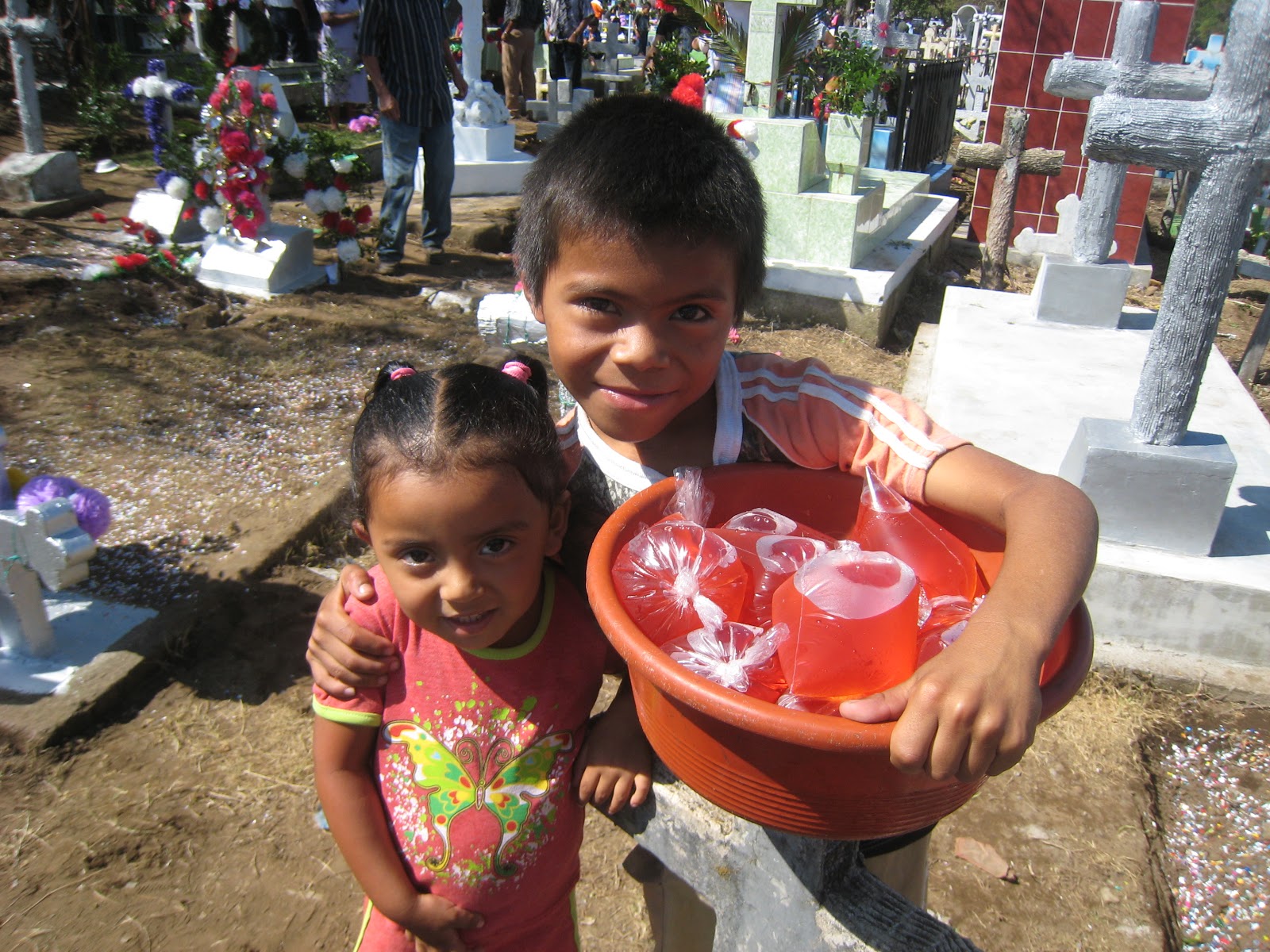
We all met back at the first gravesite around 10am. Everyone was taking off except Kathy and me. We were going to walk around the cemetery for a while to look at other graves and chat with people we knew. On our journey through the cemetery we saw lots of people from the cantons and talked with them for a while. I saw several of my students painting and selling things. I bought some juice from one of my second grade students and his sister.

We also stopped to chat with a couple people who we didn’t know as we walked. People seemed eager to tell us about whose grave they were decorating and their traditions. We spent some time talking to one woman who gave me several flowers as a gift. I noticed that as we were walking I didn’t see anyone crying or looking sad. In fact, everyone seemed to be happy. That doesn’t mean there weren’t sad people in the cemetery, but the overall tone of the day seemed to be one of cheerfulness

Walking through the cemetery is not always an easy task because there are usually lots of weeds and there’s no organization to the graves. It’s hard to avoid stepping on graves when you walk. Today all the weeds had been removed but we had to watch out for flowers and other people. Everything and everyone were very close together. Also, the dirt around many graves was built up so it looked like the person was freshly buried. I personally found it weird but it’s just one of the customs.


Painting on a name


Painting silver and blue


Filled with flowers


Some fresh greenery and confetti


Some plastic garland wrapped around the crosses


Note how he's stepping on newspaper
so as not to get the grave dirty


Each one unique


His hands were covered in gold


Not sure how this plastic bag
got drapped around the cross


Some graves were left unpainted


Lots of people


I love the silver


One of my students who was painting


The woman sitting here had lost
her husband and her son


So many colors


Bright colors


Another student of mine who was painting


Sitting on the grave and enjoying a sucker


A few real flowers in this one


Matching flower arrangements


Another unpainted grave


At 11:00am we went outside the cemetery to check out the food, flowers, and people. There were all kinds of food were being sold: pupusas, chicken, beef, french fries, atoles, juices, beer, coconuts, and sugar cane. Kathy and I both got some french fries to munch on. After snacking on those we went to get some sugar cane. It’s the time of year when the sugar cane is ready to be harvested, and raw sugar cane is a special snack. A lady standing at the sugar cane stand helped Kathy and I find a good stalk. Then the guy selling it cut it in half and we were on our way. We got Cecilia some food for lunch since she was the only one at the house and then we headed home.


Flowers for sale


So many to choose from


Presliced sugarcane


City Hall is building a new fence around the cemetery


Walking in the street


Chopping coconuts


Lots of sugarcane


Pedro walking back home from the cemetery


I had a great time at my first Day of the Dead celebration. It’s such a wonderful tradition. I love that the cemeteries are colorful and beautiful. Instead of being a place only for sadness, cemeteries can be a place of joy in remembering our loved ones and celebrating their lives. And death can be seen not just as the end of life but as a part of it.

Perhaps they are not stars, but rather openings in heaven where the love of our lost ones pours through and shines down upon us to let us know they are happy  ~ Eskimo Proverb